Герберт Уэллс - The Invisible Man
Здесь есть возможность читать онлайн «Герберт Уэллс - The Invisible Man» — ознакомительный отрывок электронной книги совершенно бесплатно, а после прочтения отрывка купить полную версию. В некоторых случаях можно слушать аудио, скачать через торрент в формате fb2 и присутствует краткое содержание. Город: Москва, Год выпуска: 1955, Издательство: Издательство литературы на иностранных языках, Жанр: Фантастика и фэнтези, на английском языке. Описание произведения, (предисловие) а так же отзывы посетителей доступны на портале библиотеки ЛибКат.
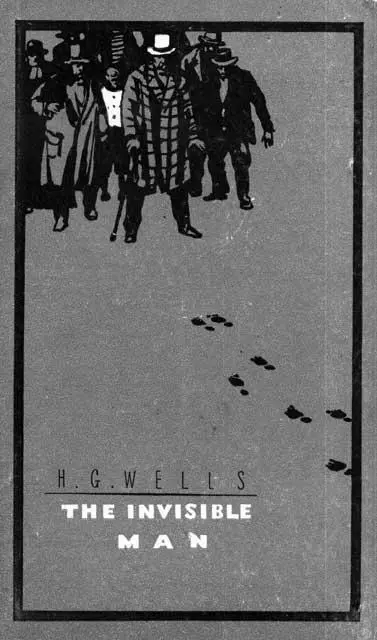
- Название:The Invisible Man
- Автор:
- Издательство:Издательство литературы на иностранных языках
- Жанр:
- Год:1955
- Город:Москва
- ISBN:нет данных
- Рейтинг книги:4 / 5. Голосов: 1
-
Избранное:Добавить в избранное
- Отзывы:
-
Ваша оценка:
The Invisible Man: краткое содержание, описание и аннотация
Предлагаем к чтению аннотацию, описание, краткое содержание или предисловие (зависит от того, что написал сам автор книги «The Invisible Man»). Если вы не нашли необходимую информацию о книге — напишите в комментариях, мы постараемся отыскать её.
The Invisible Man — читать онлайн ознакомительный отрывок
Ниже представлен текст книги, разбитый по страницам. Система сохранения места последней прочитанной страницы, позволяет с удобством читать онлайн бесплатно книгу «The Invisible Man», без необходимости каждый раз заново искать на чём Вы остановились. Поставьте закладку, и сможете в любой момент перейти на страницу, на которой закончили чтение.
Интервал:
Закладка:
"Then—Heaven knows why—I fell thinking of my father's funeral again, and the dismal, windy hillside, until the day had come. I found sleep was hopeless, and, locking my door after me, wandered out into the morning streets."
"You don't mean to say there's an Invisible Cat at large in the world?" said Kemp.
"If it hasn't been killed," said the Invisible Man. "Why not?"
"Why not?" said Kemp. "I didn't mean to interrupt."
"It's very probably been killed," said the Invisible Man. "It was alive four days after, I know, and down a grating in Great Tichfield Street, because I saw a crowd round the place trying to see whence the miaowing came."
He was silent for the best part of a minute. Then he resumed abruptly: "I remember that morning before the change very vividly.
"I must have gone up Great Portland Street—for I remember the barracks in Albany Street and the horse soldiers coming out, and at last I found myself sitting in the sunshine and feeling very ill and strange on the summit of Primrose Hill. It was a sunny day in January—one of those sunny, frosty days that came before the snow this year. My weary brain tried to formulate the position, to plot out a plan of action.
"I was surprised to find, now that my prize was within my grasp how inconclusive its attainment seemed. As a matter of fact I was worked out, the intense stress of nearly four years' continuous work left me incapable of any strenght or feeling. I was apathetic, and I tried in vain to recover the enthusiasm of my first inquiries, the passion of discovery that had enabled me to compass even the downfall of my father's gray hairs. [4] 20.4 to compass even the downfall of my father's gray hairs — даже навлечь позор на седую голову отца. Выражение the downfall of my father's gray hairs связано со словами из библии: "Then shall you bring down my gray hairs with sorrow to the grave."
Nothing seemed to matter. I saw pretty clearly this was a transient mood, due to overwork and want of sleep, and that either by drugs or rest it would be possible to recover my energies.
"All I could think clearly was that the thing had to be carried through; the fixed idea still ruled me. And soon, for the money I had was almost exhausted, I looked about me at the hillside with children playing and girls watching them, and tried to think of all the fantastic advantages an invisible man would have in the world. After a time I crawled home, took some food and a strong dose of strychnine, and went to sleep in my clothes on my unmade bed… Strychnine is a grand tonic, Kemp, to take the rlabbiness out of a man."
"It's the devil," said Kemp. "It's the pal?olithic in a bottle."
"I awoke vastly invigorated and rather irritable. You know?"
"I know the stuff."
"And there was some one rapping at the door. It was my landlord with threats and inquiries, an old Polish Jew in a long gray coat and greasy slippers. I had been tormenting a cat in the night, he was sure—the old woman's tongue had been busy. He insisted on knowing all about it. The laws of this country against vivisection were very severe—he might be liable. [5] 20.5 he might be liable — зд. его могли привлечь к ответственности (опущено: to persecution)
I denied the cat. Then the vibration of the little gas-engine could be felt all over the house, he said. That was true, certainly. He edged round me into the room, peering about over his German silver spectacles, and a sudden dread came into my mind that he might carry away something of my secret. I tried to keep between him and the concentrating apparatus I had arranged, and that only made him more curious. What was I doing? Why was I always alone and secretive? Was it legal? Was it dangerous? I paid nothing but the usual rent. His had always been a most respectable house—in a disreputable neighbourhood. Suddenly my temper gave way. I told him to get out. He began to protest, to jabber of his right of entry. In a moment I had him by the collar—something ripped—and he went spinning out into his own passage. I slammed and locked the door and sat down quivering.
"He made a fuss outside, which I disregarded, and after a time he went away.
"But this brought matters to a crisis. I did not know what he would do, nor even what he had the power to do. To move to fresh apartments would have meant delay—altogether I had barely twenty pounds left in the world, for the most part in a bank—and I could not afford that. Vanish! It was irresistible. Then there would be an inquiry, the sacking of my room.
"At the thought of the possibility of my work being exposed or interrupted at its very climax, I became angry and active. I hurried out with my three books of notes, my cheque book—the tramp has them now—and directed them from the nearest Post Office to a house of call for letters and parcels [6] 20.6 a house of call for letters of letters and parcels — контора по хранению писем и пакетов до востребования
in Great Portland Street. I tried to go out noiselessly. Coming in, I found my landlord going quietly upstairs—he had heard the door close, I suppose. You would have laughed to see him jump aside on the landing as I came tearing after him. He glared at me as I went by him, and I made the house quiver with the slamming of my door, I heard him come shuffling up to my door, hesitate, and go down. I set to work upon my preparations forthwith.
"It was all done that evening and night. While I was still sitting under the sickly, drowsy influence of the drugs that decolourise blood, there came a repeated knocking at the door. It ceased, footsteps went away and returned, and the knocking was resumed. There was an attempt to push something under the door—a blue paper. Then in a fit of irritation I rose, and went and flung the door wide open. 'Now then?' said I.
"It was the landlord, with a notice of ejectment or something. He held it out to me, saw something odd about my hands, I expect, and lifted his eyes to my face.
"For a moment he gaped. Then he gave a sort of inarticulate cry, dropped candle and writ together, and went blundering down the dark passage to the stairs.
"I shut the door, locked it, and went to the looking-glass. Then I understood his terror… My face was white—like white stone.
"But it was all horrible. I had not expected the suffering. A night of racking anguish, sickness, and fainting. I set my teeth, though my skin was presently afire, all my body afire, but I lay there like grim death. [7] 20.7 like grim death — упорно. Устойчивое словосочетание
I understood now how it was the cat had howled until I chloroformed it. Lucky it was I lived alone and untended in my room. There were times when I sobbed, and groaned, and talked. But I stuck to it… I became insensible, and woke languid in the darkness.
"The pain had passed. I thought I was killing myself, and I did not care. I shall never forget that dawn, and the strange horror of seeing that my hands had become as clouded glass, and watching them grow clearer and thinner as the day went by, until at last I could see the sickly disorder of my room through them, though I closed my transparent eyelids. My limbs became glassy, the bones and arteries faded, vanished, and the little white nerves went last. I gritted my teeth and stayed there to the end… At last only the dead tips of the finger-nails remained, pallid and white, and the brown stain of some acid upon my fingers.
"I struggled up. At first I was as incapable as a swathed infant—stepping with limbs I could not see. I was weak and very hungry. I went and stared at nothing in my shaving glass—at nothing, save where an attenuated pigment still remained behind the retina of my eyes, fainter than mist. I had to hang on to the table and press my forehead to the glass.
Читать дальшеИнтервал:
Закладка:
Похожие книги на «The Invisible Man»
Представляем Вашему вниманию похожие книги на «The Invisible Man» списком для выбора. Мы отобрали схожую по названию и смыслу литературу в надежде предоставить читателям больше вариантов отыскать новые, интересные, ещё непрочитанные произведения.










Обсуждение, отзывы о книге «The Invisible Man» и просто собственные мнения читателей. Оставьте ваши комментарии, напишите, что Вы думаете о произведении, его смысле или главных героях. Укажите что конкретно понравилось, а что нет, и почему Вы так считаете.