Matt Bell - How They Were Found
Здесь есть возможность читать онлайн «Matt Bell - How They Were Found» весь текст электронной книги совершенно бесплатно (целиком полную версию без сокращений). В некоторых случаях можно слушать аудио, скачать через торрент в формате fb2 и присутствует краткое содержание. Год выпуска: 2011, ISBN: 2011, Издательство: Keyhole Press, Жанр: Фантастика и фэнтези, на английском языке. Описание произведения, (предисловие) а так же отзывы посетителей доступны на портале библиотеки ЛибКат.
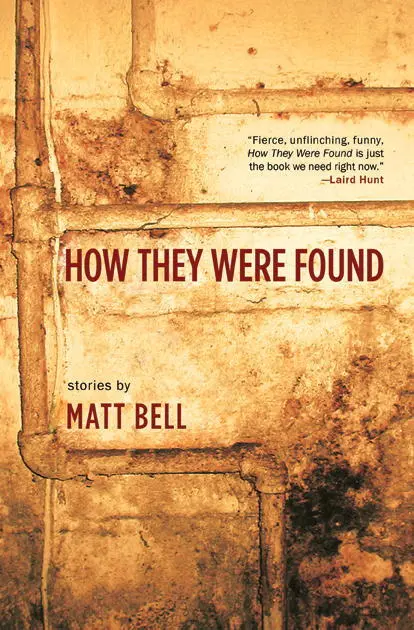
- Название:How They Were Found
- Автор:
- Издательство:Keyhole Press
- Жанр:
- Год:2011
- ISBN:9780982151259
- Рейтинг книги:4 / 5. Голосов: 1
-
Избранное:Добавить в избранное
- Отзывы:
-
Ваша оценка:
How They Were Found: краткое содержание, описание и аннотация
Предлагаем к чтению аннотацию, описание, краткое содержание или предисловие (зависит от того, что написал сам автор книги «How They Were Found»). Если вы не нашли необходимую информацию о книге — напишите в комментариях, мы постараемся отыскать её.
, Matt Bell draws from a wide range of genres to create stories that are both formally innovative and imaginatively rich. In one, a 19th-century minister follows ghostly instructions to build a mechanical messiah. In another, a tyrannical army commander watches his apocalyptic command slip away as the memories of his men begin to fade and fail. Elsewhere, murders are indexed, new worlds are mapped, fairy tales are fractured and retold and then fractured again.
Throughout these thirteen stories, Bell’s careful prose burrows at the foundations of his characters’ lives until they topple over, then painstakingly pores over the wreckage for what rubbled humanity might yet remain to be found.
Contains the story “Dredge,” selected for
. Review
“Body toll notwithstanding,
is anything but bleak. For one thing, there’s the prose: generous, urgent, rhythmic.”
—
“Reminscent of Friedrich Dürrenmatt’s
in its calm examination and unsettling embodiment of mental and physical extremes,
is a dreamer’s chronicle of the loss and partial recovery of a world given over to the wrecking ball. Fierce, unflinching, funny,
is just the book we need right now, Matt Bell just the writer.”
—Laird Hunt, author of
“
offers a world with shifting rules, described with a lovely and deceptive simplicity. This guide shows you thirteen different types of wilderness, and you can spend all day exploring before you realize you are lost.”
—Amelia Gray, author of
and
“You’re a robot if the stories in Matt Bell’s debut collection don’t exhilarate, frighten, and unalterably change you. His wild manipulation of form and genre makes the bulk of contemporary fiction feel bloodless and inert in comparison, but it is Bell’s recurring arrival at something sturdy and true about human behavior that makes the stories in *How They Were Found* so rewarding and resonant.”
—Matthew Derby, author of
How They Were Found — читать онлайн бесплатно полную книгу (весь текст) целиком
Ниже представлен текст книги, разбитый по страницам. Система сохранения места последней прочитанной страницы, позволяет с удобством читать онлайн бесплатно книгу «How They Were Found», без необходимости каждый раз заново искать на чём Вы остановились. Поставьте закладку, и сможете в любой момент перейти на страницу, на которой закончили чтение.
Интервал:
Закладка:
Dinner: A meal consisting of brand-name hot dogs and macaroni and cheese. The father is not frugal with his shopping as the mother was. He buys what he recognizes, assured by television that he is making a good choice.
The boy has been in so few other houses that actually picturing the interior of any other home means simply reconfiguring the rooms of their own house into his conception of the new one. The floor plans he likes best are ones he can most easily shoehorn his own into, using the homes of his grandmother and of the neighbor boy his mother once forced him to play with to fill in the bigger houses. The father does not say much in return, but the boy has become used to this. To make up for his father’s reticence, the boy talks more and more, more than he is comfortable with, not because he wants to but because he does not like the silence at the table, the reminder that there is something missing, that without her they are alone even when they are with each other.
Suicide: Car running, windows closed, parked in the garage. No one would ever drive it again and two months after her death it would be sold at a loss. The boy was not supposed to find her. She did not know that school had become a half day, that everyone had been sent home early because of the impending snowfall. The note taped to the outside of the driver’s window was addressed to his father, not to him. The boy could barely read then, but decided to try anyway. He pulled the note off the window, leaving the scotch tape behind.
Mother: Hidden underneath. Pressed against the window with her mouth open, the steam from her breath slowly disappearing from the cloudy glass. The last time he saw her.
9-1-1: The boy had learned the number in school, but he had not been taught that it was not failsafe, that it did not save everyone. For months he thought about raising his hand and telling his teacher about her error, but they had moved on from health and safety and would not speak of it again.
Extolling the virtues of the houses to the father, the boy lists the numbers of bedrooms and bathrooms. He wonders what half a bathroom is but does not ask. He explains that all the houses from American Homes have R-19 insulation, which he has been assured by the catalog is the very best kind. He shows his father the cross section of a wall and repeats from memory the phrase oriented strand board . The boy pronounces many of the words wrong. He does not realize that learning words by sounding them out alone has left him with false pronunciations, sounds that as an adult he will be constantly corrected for. No matter how hard he tries to hide it, he will not speak the same language others speak.
Father: Quiet. Sluggish. Often watches the news from his easy chair with his eyes closed. A tumbler of melting, browning ice dangles from his fingertips at all times. Has apparently forgotten how to play catch or even how to get to the park.
Father (previous): Fun. Loud. Told jokes the mother disapproved of but that the boy loved. Often rustled the boy’s hair, which the boy pretended to hate but secretly didn’t. Missing in action.
Father (future): Defined by the loss of his partner in a way he was never defined by her presence.
The boy reads the catalogs in the evening while his father naps in his recliner. His father rarely makes it to the bedroom anymore and so sometimes the boy sleeps on the couch to be near him. More often he goes to his own room, where he reads the catalogs until he is too tired to keep his eyes open. Each night, before he sleeps, he chooses the home he thinks they need, his decisions changing quickly, like moods or Michigan weather. Sometimes he falls asleep with the light on, and those nights are the ones he stays in his bed.
On other nights, the boy wakes up shaking, then walks into the living room where his father sleeps. Standing beside the recliner, the boy tries to will his father to wake up before starting to shake him. Neither tactic works. The father snores on, even when the boy begins at last to talk, begins to insist that his father talk back, that he take them away from this home which is no longer any such thing.
Eventually his teacher notices the black rings below his eyes and keeps him inside at recess. She asks him if there’s anything he wants to talk about, if maybe something is happening at home. He knows she knows, but if she will not say so, then neither will he. The boy does not show her the catalogs, hides their meaning from anyone who might accidentally see and ask. Curiosity is not the same as caring.
The new house will end up being an apartment, a word the boy doesn’t even know yet, and then later the new house will be his grandma’s basement. The boy will lose the catalogs on one moving day or another, but by then he won’t need their physical presence. He will have memorized them completely. They will be part of who he is. As he grows, he will make friends and then lose friends, realizing a year or two later that he is unable to remember their names or faces but can still recount the number of bedrooms in their houses, how many bathrooms and a half they had. When he thinks of his old house, the one he had been born in and his mother had died in, he will picture it as a spread in one of his catalogs, imaginary fingers tracing the picture of the remembered home, the hard blue lines of the floor plans.
Home: Three bedrooms. One bath. Storm windows and a thirty-five-year guarantee on the shingles.
Family: Two parents. One child. One dead with two survivors.
This is a home. This is a family. This is what happens in a home when a family breaks down a fault line, when a foundation suddenly shifts because once it got wet when it should have stayed dry, because that wet spot was sealed beneath the floorboards, because it hid there for years and years before cracks began showing around doorways and windows, before one day whole chunks of plaster fell from the ceilings and walls as something fundamental within gave way to ruin.
THE COLLECTORS
How long has Homer been sitting here in the dark? A decade, a year, a day, an hour, a minute, or at least this minute, the one where his eyes pop open and his ears perk up, listening to the voice howling in the dark. Somewhere in the house, Langley is yelling for Homer to help him, has, perhaps, been doing so for some time. Homer leans over the edge of his tattered leather chair—the chair that once belonged to his father and has been his home since he lost his sight—then sets down his snifter, the brandy long ago emptied into the hollows of his throat. He stands, legs shaky, and for a moment thinks he will fall back into the chair’s ripped excess. He finds his balance, takes a step or two forward, then loses it, crashing forward onto the damp floor covered in orange peels and pipe ash, the remains of the only forms of nourishment he’s allowed. Homer calls out for Langley, who calls out for him, and together their voices echo through the twisted passageways and piled junk of their home. Homer’s eyes long gone, everything has become touch, life a mere series of tactile experiences. He pushes himself upward, his hands sinking into the orange peels that litter the floor, their consistency like gums pulled away from teeth. He’s disgusted, but has been for so many years that this newest indignity barely registers.
In a loud voice, he tells Langley that he is coming, but he doesn’t know if that’s true. There’s so much between them, much of it dangerous, all of it theirs.
Some of the items removed from the Collyer mansion include hundreds of feet of rope, three baby carriages, rakes and hoes and other gardening implements, several rusted bicycles, kitchen utensils (including at least four complete sets of china and several potato peelers), a heap of glass chandeliers that had been removed from the ceilings to make room for the piles and the tunnels, the folding top of a horse-drawn carriage, a sawhorse, a room full of dressmaking dummies, several portraits of both family members and early-century presidents such as Calvin Coolidge and Warren Harding, a plaster bust of Herman Melville, a kerosene stove placed precariously close to the stacks of newspapers in Homer’s sitting room, a variety of children’s furniture and clothing, the chassis of a Model T Ford that Langley had apparently been trying to turn into a generator, hundreds of yards of unused silk and other fabrics, several broken clocks and piles of clock parts, one British and six American flags, piles of tapestries and rugs, whole rooms filled with broken furniture and bundled lumber. There was also the matter of their inheritance from their father, which included all his medical equipment, plus his thousands of medical and anatomical reference texts, greatly expanding the already large, impenetrably stuffed Collyer family library. All in all, the accumulated possessions of the Collyer brothers added up to over one hundred fifty tons of junk, most of it unremarkable except for the advanced state of ruin and decay that infused everything.
Читать дальшеИнтервал:
Закладка:
Похожие книги на «How They Were Found»
Представляем Вашему вниманию похожие книги на «How They Were Found» списком для выбора. Мы отобрали схожую по названию и смыслу литературу в надежде предоставить читателям больше вариантов отыскать новые, интересные, ещё непрочитанные произведения.








Обсуждение, отзывы о книге «How They Were Found» и просто собственные мнения читателей. Оставьте ваши комментарии, напишите, что Вы думаете о произведении, его смысле или главных героях. Укажите что конкретно понравилось, а что нет, и почему Вы так считаете.