Margaret Dean - Endurance - A Year in Space, A Lifetime of Discovery
Здесь есть возможность читать онлайн «Margaret Dean - Endurance - A Year in Space, A Lifetime of Discovery» весь текст электронной книги совершенно бесплатно (целиком полную версию без сокращений). В некоторых случаях можно слушать аудио, скачать через торрент в формате fb2 и присутствует краткое содержание. Город: New York, Год выпуска: 2017, ISBN: 2017, Издательство: Alfred A. Knopf, Жанр: Биографии и Мемуары, sci_cosmos, на английском языке. Описание произведения, (предисловие) а так же отзывы посетителей доступны на портале библиотеки ЛибКат.
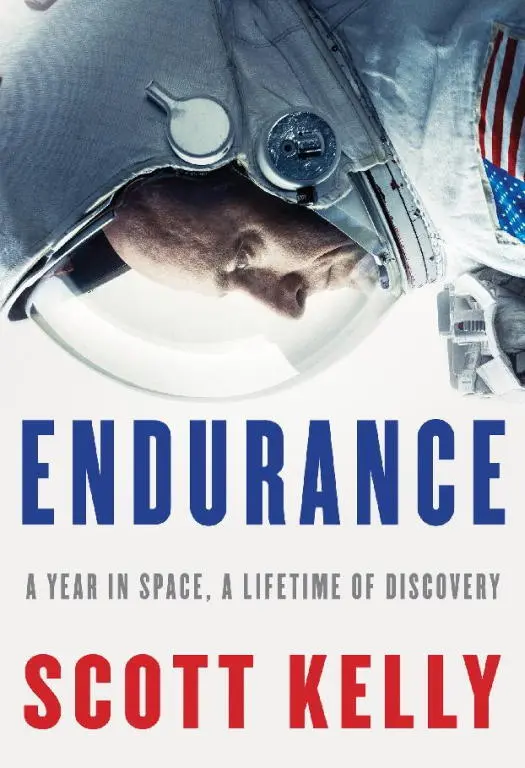
- Название:Endurance: A Year in Space, A Lifetime of Discovery
- Автор:
- Издательство:Alfred A. Knopf
- Жанр:
- Год:2017
- Город:New York
- ISBN:978-1-524-73159-5
- Рейтинг книги:3 / 5. Голосов: 1
-
Избранное:Добавить в избранное
- Отзывы:
-
Ваша оценка:
Endurance: A Year in Space, A Lifetime of Discovery: краткое содержание, описание и аннотация
Предлагаем к чтению аннотацию, описание, краткое содержание или предисловие (зависит от того, что написал сам автор книги «Endurance: A Year in Space, A Lifetime of Discovery»). Если вы не нашли необходимую информацию о книге — напишите в комментариях, мы постараемся отыскать её.
The veteran of four space flights and the American record holder for consecutive days spent in space, Scott Kelly has experienced things very few have. Now, he takes us inside a sphere utterly inimical to human life. He describes navigating the extreme challenge of long-term spaceflight, both existential and banal: the devastating effects on the body; the isolation from everyone he loves and the comforts of Earth; the pressures of constant close cohabitation; the catastrophic risks of depressurization or colliding with space junk, and the still more haunting threat of being unable to help should tragedy strike at home—an agonizing situation Kelly faced when, on another mission, his twin brother’s wife, Gabrielle Giffords, was shot while he still had two months in space.
Kelly’s humanity, compassion, humor, and passion resonate throughout, as he recalls his rough-and-tumble New Jersey childhood and the youthful inspiration that sparked his astounding career, and as he makes clear his belief that Mars will be the next, ultimately challenging step in American spaceflight.
A natural storyteller and modern-day hero, Kelly has a message of hope for the future that will inspire for generations to come. Here, in his personal story, we see the triumph of the human imagination, the strength of the human will, and the boundless wonder of the galaxy.
Endurance: A Year in Space, A Lifetime of Discovery — читать онлайн бесплатно полную книгу (весь текст) целиком
Ниже представлен текст книги, разбитый по страницам. Система сохранения места последней прочитанной страницы, позволяет с удобством читать онлайн бесплатно книгу «Endurance: A Year in Space, A Lifetime of Discovery», без необходимости каждый раз заново искать на чём Вы остановились. Поставьте закладку, и сможете в любой момент перейти на страницу, на которой закончили чтение.
Интервал:
Закладка:
I finish up and take one last look over my work site, making sure everything looks right, before heading back out to the end of the truss to help Kjell. Hand over hand, it takes me a few minutes to get to him. I look over his suit, inspecting it for yellow spots of ammonia. I see a few places that look suspicious, but when I look closer I can see the threads of the suit material below the discoloration, which rules out ammonia as the cause. I’m glad I decided to wear my glasses, which haven’t slipped or fogged up, or I might not have been able to tell the difference. We’re preparing to vent the ammonia system—Kjell opens a valve and quickly moves clear. High-pressure ammonia streams out the back of the space station like a giant cloud of snow. As we watch, the sun catches the huge plume, its particles glistening against the blackness of space. It’s a moment of unexpected beauty, and we float there for a minute, taking it all in.
When the venting seems to be complete, Megan instructs us to separate—Kjell will stay here and work on cleaning up the ammonia vent tool while I venture back to the solar array joint to remove and stow an ammonia jumper I installed earlier. The solar array joint continually rotates in the same direction to keep the solar arrays pointed at the sun, 360 degrees every ninety minutes, while passing electricity downstream. Megan talks me through the process. I struggle with one of the connections.
“Hey Megan. With the bale all the way aft, the white band should be visible or not?” I ask.
“Yes,” Megan replies, “the forward white band should be visible.”
I work with it for a few more minutes before getting it configured the way it’s supposed to be.
“Okay,” I report. “Forward white band visible.”
“Okay, Scott, I copy the forward white band is visible—check the detent button is up.”
“It’s up.”
When I hear Megan’s voice again, there is a subtly different tone.
“I’m going to ask you to pause right here, and I’m going to tell you guys what we’ve got going on.”
She doesn’t say what this pause is about, but Kjell and I know: Megan has just been given some news within mission control, something the flight directors have to make a quick decision about. It may be something that puts us in danger. She doesn’t leave us hanging for long.
“Okay. Currently, guys, from a momentum management perspective, we’re getting close to a LOAC [loss of attitude control] condition,” she says. She means the control moment gyroscopes, which control the station’s attitude—our orientation in the sky—have become saturated by the venting ammonia. Soon we will lose control of our attitude, and when that happens, we will soon lose communication with the ground. This is a dangerous situation, just as we anticipated.
Megan continues. “So what we need Kjell to do is to pull out of your current activity and head over toward the radiator. We’re going to have you redeploy it.”
If we can’t cinch down this radiator properly, we will have to put it back out in its extended position.
“Copy,” Kjell answers crisply.
“You’ve probably gathered from a timeline perspective where we’re going,” Megan says. “We’re going to have you clean up the vent tool eventually, Kjell. And Scott, you’re going to continue with the jumper, but we are not going after cinching and shrouding the radiator today. It will take too long.”
We both acknowledge her. This situation with the gyroscopes is serious enough to alter our plans. Even under the best of circumstances, when we hear we are close to saturating the gyros, it’s one of those “Oh, shit” moments. The station won’t start spinning out of control like a carnival ride, but losing communication with Megan and all the experts on the ground is never a good thing. And with the two of us outside, a communication blackout would add a new danger to an already risky situation. In all the preparation we’ve done for this spacewalk, we had never discussed the possibility of losing attitude control due to ammonia venting.
Houston is discussing handing over attitude control to the Russian segment. The Russian thrusters can control our attitude, less elegantly, with the use of propellant. The handover process isn’t instantaneous, and we could lose communication with the ground in the meantime anyway. On top of that, the Russian thrusters use hypergolic fuel, which is incredibly toxic and a known carcinogen. If any of the hydrazine or dinitrogen tetroxide got onto our spacesuits, we could bring those chemicals back into the station with us.
But attitude control is important. If we can’t talk to the ground, we lose the expertise of the thousands of people in Houston, Moscow, and other sites all over the world who understand every aspect of the systems keeping us alive up here. Our spacesuits, the life support systems within the station, the Soyuz meant to get us back safely to Earth, the science experiments that are the reason for us being here in the first place—our comm system is our only connection to the experts on all of these. Our only connection to Earth. We have no choice but to take the risk.
I think about just how alone Kjell and I are out here. The ground wants to help us, but we may not be able to hear them. Our crewmates inside the station would do anything to ensure our safety, but they can’t reach us. Kjell and I have only each other. Our lives are in our own hands.
As instructed, we re-extend the spare radiator rather than taking the time to cinch it down and install a thermal cover. It will be safe in this configuration until a future spacewalk can retract it. We are nearing the seven-hour mark, the point where we were planning to head back to the airlock, but we are still far away with much left to do before we can get inside. We start the process of cleaning up our work site and inventorying our tool bags and mini-workstations to make sure we aren’t leaving anything behind. Once everything is packed up and checked, we start the laborious process of traveling hand over hand back to where we started.
We are about halfway to the airlock when I hear Megan’s voice again in my headset.
“Scott, if you’re okay with it, we need you to go back to the vent valves and make sure they are in the right configuration. The specialists are seeing some data they aren’t happy with.”
This is a simple request, but Megan’s tone communicates a lot—she wants me to know this action is not required and that I can say no without causing any problems. It’s a task that could easily be left for the next astronauts, who will be launching next month. She knows that we have been outside a long time and are exhausted. My body is aching, my feet are cold, my knuckles are rubbed raw (some astronauts even lose fingernails from the intense pressure spacewalks put on our hands). I’ve been sweating and am dehydrated. There is still so much we have to do before we can get safely back inside, especially if anything unexpected happens between now and then.
I answer her right away, putting a vigor into my voice that I don’t actually feel. “Sure, no problem,” I say.
I’ve been convincing myself all day that I actually feel fine, that I have plenty of energy left. Both Kjell’s life and my own depend on our ability to push past our limits. I’ve convinced myself so effectively that I’ve convinced the ground team too.
I head to the back side of the truss again to check the vent valves. It’s dark now and starting to get cold. I don’t waste the effort to adjust the cooling on my suit—even just that simple gesture would hurt my hands too much. I would rather just freeze.
In the darkness, I get turned around and upside down. I can see only what’s immediately in front of my face, like a scuba diver in murky waters, and it’s completely disorienting. Everything looks unfamiliar in the dark. (One difference between the Russian approach to spacewalking and ours is that the Russians stop working when it’s dark; the cosmonauts just hang on to the side of the station and rest, waiting for the sun to come up again. This is safer in one sense—they are probably less likely to make mistakes, and to tire—but they also expend twice as many resources and do twice as many spacewalks because they only work half the time they are outside.)
Читать дальшеИнтервал:
Закладка:
Похожие книги на «Endurance: A Year in Space, A Lifetime of Discovery»
Представляем Вашему вниманию похожие книги на «Endurance: A Year in Space, A Lifetime of Discovery» списком для выбора. Мы отобрали схожую по названию и смыслу литературу в надежде предоставить читателям больше вариантов отыскать новые, интересные, ещё непрочитанные произведения.









Обсуждение, отзывы о книге «Endurance: A Year in Space, A Lifetime of Discovery» и просто собственные мнения читателей. Оставьте ваши комментарии, напишите, что Вы думаете о произведении, его смысле или главных героях. Укажите что конкретно понравилось, а что нет, и почему Вы так считаете.