Margaret Dean - Endurance - A Year in Space, A Lifetime of Discovery
Здесь есть возможность читать онлайн «Margaret Dean - Endurance - A Year in Space, A Lifetime of Discovery» весь текст электронной книги совершенно бесплатно (целиком полную версию без сокращений). В некоторых случаях можно слушать аудио, скачать через торрент в формате fb2 и присутствует краткое содержание. Город: New York, Год выпуска: 2017, ISBN: 2017, Издательство: Alfred A. Knopf, Жанр: Биографии и Мемуары, sci_cosmos, на английском языке. Описание произведения, (предисловие) а так же отзывы посетителей доступны на портале библиотеки ЛибКат.
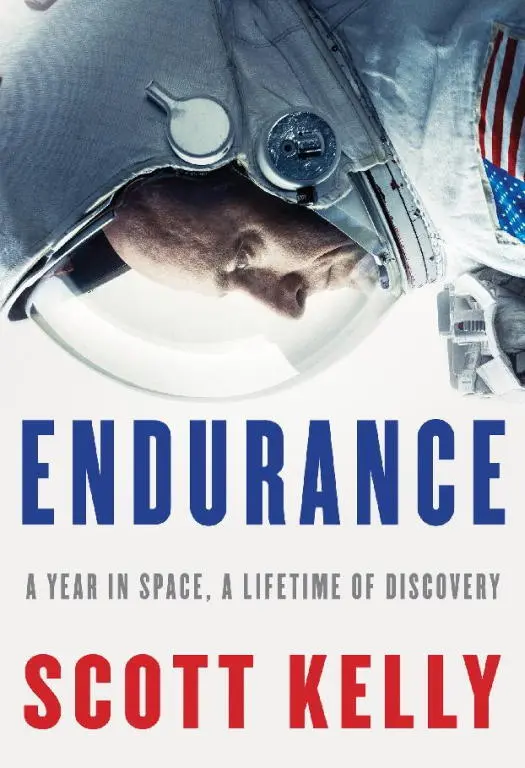
- Название:Endurance: A Year in Space, A Lifetime of Discovery
- Автор:
- Издательство:Alfred A. Knopf
- Жанр:
- Год:2017
- Город:New York
- ISBN:978-1-524-73159-5
- Рейтинг книги:3 / 5. Голосов: 1
-
Избранное:Добавить в избранное
- Отзывы:
-
Ваша оценка:
Endurance: A Year in Space, A Lifetime of Discovery: краткое содержание, описание и аннотация
Предлагаем к чтению аннотацию, описание, краткое содержание или предисловие (зависит от того, что написал сам автор книги «Endurance: A Year in Space, A Lifetime of Discovery»). Если вы не нашли необходимую информацию о книге — напишите в комментариях, мы постараемся отыскать её.
The veteran of four space flights and the American record holder for consecutive days spent in space, Scott Kelly has experienced things very few have. Now, he takes us inside a sphere utterly inimical to human life. He describes navigating the extreme challenge of long-term spaceflight, both existential and banal: the devastating effects on the body; the isolation from everyone he loves and the comforts of Earth; the pressures of constant close cohabitation; the catastrophic risks of depressurization or colliding with space junk, and the still more haunting threat of being unable to help should tragedy strike at home—an agonizing situation Kelly faced when, on another mission, his twin brother’s wife, Gabrielle Giffords, was shot while he still had two months in space.
Kelly’s humanity, compassion, humor, and passion resonate throughout, as he recalls his rough-and-tumble New Jersey childhood and the youthful inspiration that sparked his astounding career, and as he makes clear his belief that Mars will be the next, ultimately challenging step in American spaceflight.
A natural storyteller and modern-day hero, Kelly has a message of hope for the future that will inspire for generations to come. Here, in his personal story, we see the triumph of the human imagination, the strength of the human will, and the boundless wonder of the galaxy.
Endurance: A Year in Space, A Lifetime of Discovery — читать онлайн бесплатно полную книгу (весь текст) целиком
Ниже представлен текст книги, разбитый по страницам. Система сохранения места последней прочитанной страницы, позволяет с удобством читать онлайн бесплатно книгу «Endurance: A Year in Space, A Lifetime of Discovery», без необходимости каждый раз заново искать на чём Вы остановились. Поставьте закладку, и сможете в любой момент перейти на страницу, на которой закончили чтение.
Интервал:
Закладка:
“Our religion is ‘Be nice to other people and eat all your vegetables,’ ” I said. I was pleased with myself for describing my religious beliefs so concisely and that she was satisfied with it. I respect people of faith, including an aunt who is a nun, but I’ve never felt that faith myself.
WE WILL be spending a lot of time this week working on an experiment called “Fluid Shifts Before, During, and After Prolonged Space Flight and Their Association with Intracranial Pressure and Visual Impairment”—“Fluid Shifts” for short. Misha and I are the subjects of the experiment, and it promises some of the most important results for the future of spaceflight.
Maybe the most troubling negative effect of long-duration missions in space has been damage to astronauts’ vision, including mine on my previous mission. At first, these changes were assumed to be temporary. Once astronauts started flying longer and longer missions, though, we showed more severe symptoms. For most, the changes gradually disappeared once the mission was over; for some, the symptoms seemed to be permanent. When I flew my first mission on the space shuttle, in 1999, I didn’t need corrective lenses, but while on the mission I realized things were getting blurry in the middle range, ten or twelve feet—across the flight deck of the space shuttle. Back on Earth, my symptoms quickly resolved. My second flight was eight years later, by which time I had started using reading glasses. After about three days in space, I no longer needed them. The improvement lasted for about three months after I returned to Earth.
Three years later, for my first long-duration flight, 159 days, I was wearing bifocals all the time. After a short period in orbit, my vision got worse, and I wore stronger lenses to correct for the change. When I returned to Earth, within a few months my vision returned to what it had been when I left. But I had other troubling signs: swelling of the optic nerve and what seemed to be permanent choroidal folds. (The choroid is a blood-filled layer in the eyeball between the retina and the sclera—the white part—that provides oxygen and nourishment to the outer layers of the retina. These folds in the choroid could damage the retina and cause blind spots.) My vision symptoms so far this year seem to be similar to the last time, though we are monitoring them closely to see whether they will get worse.
If long-term spaceflight could do serious damage to astronauts’ vision, this is one of the problems that must be solved before we can get to Mars. You can’t have a crew attempting to land on a faraway planet—piloting the spacecraft, operating complex hardware, and exploring the surface—if they can’t see well.
The leading hypothesis is that increased pressure in the cerebral fluid surrounding our brains is causing the vision changes. In space, we don’t have gravity to pull blood, cerebral fluid, lymphatic fluid, mucus, water in our cells, and other fluids to the lower half of our bodies like we are used to. So the cerebral fluid does not drain properly and tends to increase the pressure in our heads. We adjust over the first few weeks in space and pee away a lot of the excess, but the full-head sensation never completely goes away. It feels a little like standing on your head twenty-four hours a day—mild pressure in your ears, congestion, round face, flushed skin. As with so many other aspects of human anatomy, the delicate structures of our heads evolved under Earth’s gravity and don’t always respond well to having it taken away.
The increased fluid pressure may squish our eyeballs out of shape and cause swelling in the blood vessels of our eyes and optic nerves. This is all still a theory, as it’s hard to measure the pressure inside our skulls in space (the best way to measure intracranial pressure is a spinal tap, which I’d very much prefer not to have to undergo, or to perform on a crewmate, in space). It’s possible, too, that high CO 2is causing or contributing to changes in our vision, since it is known to dilate blood vessels. High sodium in our space diets could also be a factor, and NASA has been working to reduce that in order to test whether this makes a difference. Only male astronauts have suffered damage to their eyes while in space, so looking at the slight differences in the head and neck veins of male and female astronauts might also help scientists start to nail down the causes. If we can’t, we just might have to send an all-women crew to Mars.
Since it’s impossible to re-create the effects of zero gravity in a lab for sustained periods of time, scientists have conducted experiments on people with pressure sensors already installed in their skulls for other medical conditions. These people were taken up on an airplane that can create weightlessness for short periods in order to measure what happens inside their heads when they reach zero gravity. Their intracranial pressure dropped when they got to microgravity, rather than increasing as had been expected. Maybe it takes a while for the fluids to shift, or maybe the leading hypothesis is wrong. Before leaving for this mission, I volunteered to have a pressure sensor installed in my skull, but NASA declined my offer. The risks of drilling a hole in my head before sending me to space for a year were too great.
In the Fluid Shifts study, Misha and I will be subjects in an experiment that uses a device for relieving the intracranial pressure of spaceflight—pants that suck. This is not a metaphor. We will take turns donning a device, roughly the shape of a pair of pants, called Chibis (Russian for “lapwing,” a type of bird), that reduces the pressure on the lower half of our bodies. The pants look a lot like the bottom half of the robot from Lost in Space, or like Wallace and Gromit’s “wrong trousers.” Reducing the pressure on our lower bodies also reduces the amount of fluid in our heads. By studying the effects of Chibis on our bodies, we hope to understand more about this problem.
One of the times these pants were used, however, the Russian cosmonaut wearing them experienced a sudden drop in heart rate and lost consciousness. His crewmates thought he was in cardiac arrest and immediately ended the experiment without ill effect. Anytime a piece of equipment has put a person at risk, NASA has been reluctant to use it again. But because the Chibis is still the best possibility we have for understanding this problem, they are making an exception.
Preparing to don the pants is actually a days-long process. We have to take baseline samples of blood, saliva, and urine, and we also have to take images of blood vessels in our heads, necks, and eyes using ultrasound. So much of the equipment we need to do these tests is only on the U.S. segment, so we spend a few hours packing it up and ferrying it over to the Russian service module. This is going to be the most complicated human experiment that’s ever been done on the International Space Station.
When it’s time to put on the device, I take off my pants and clamber into the Chibis pants, making sure the seal around my waist is secure. Misha is working the controls, slowly decreasing the pressure on my lower body, and with each incremental change I can feel the blood being pulled out of my head—in a good way. For the first time in months, I don’t feel like I’m standing on my head.
But then the feeling starts to change. It’s like I’m in an F-14 again, pulling too many g’s. I can feel myself starting to gray out, my peripheral vision closing in, where you are at risk of losing consciousness. The pants are malfunctioning, and I feel like I could have my intestines pulled out in the most unpleasant way possible.
“Hey, something’s not right with this,” I announce to Misha and Gennady. “I’m gonna have to—” I reach for the seal at my waist, prepared to break it, canceling the experiment. At the same instant, I hear Gennady yelling.
Читать дальшеИнтервал:
Закладка:
Похожие книги на «Endurance: A Year in Space, A Lifetime of Discovery»
Представляем Вашему вниманию похожие книги на «Endurance: A Year in Space, A Lifetime of Discovery» списком для выбора. Мы отобрали схожую по названию и смыслу литературу в надежде предоставить читателям больше вариантов отыскать новые, интересные, ещё непрочитанные произведения.









Обсуждение, отзывы о книге «Endurance: A Year in Space, A Lifetime of Discovery» и просто собственные мнения читателей. Оставьте ваши комментарии, напишите, что Вы думаете о произведении, его смысле или главных героях. Укажите что конкретно понравилось, а что нет, и почему Вы так считаете.