Sam Eastland - Berlin Red
Здесь есть возможность читать онлайн «Sam Eastland - Berlin Red» весь текст электронной книги совершенно бесплатно (целиком полную версию без сокращений). В некоторых случаях можно слушать аудио, скачать через торрент в формате fb2 и присутствует краткое содержание. Год выпуска: 2016, ISBN: 2016, Издательство: Faber & Faber, Жанр: Триллер, на английском языке. Описание произведения, (предисловие) а так же отзывы посетителей доступны на портале библиотеки ЛибКат.
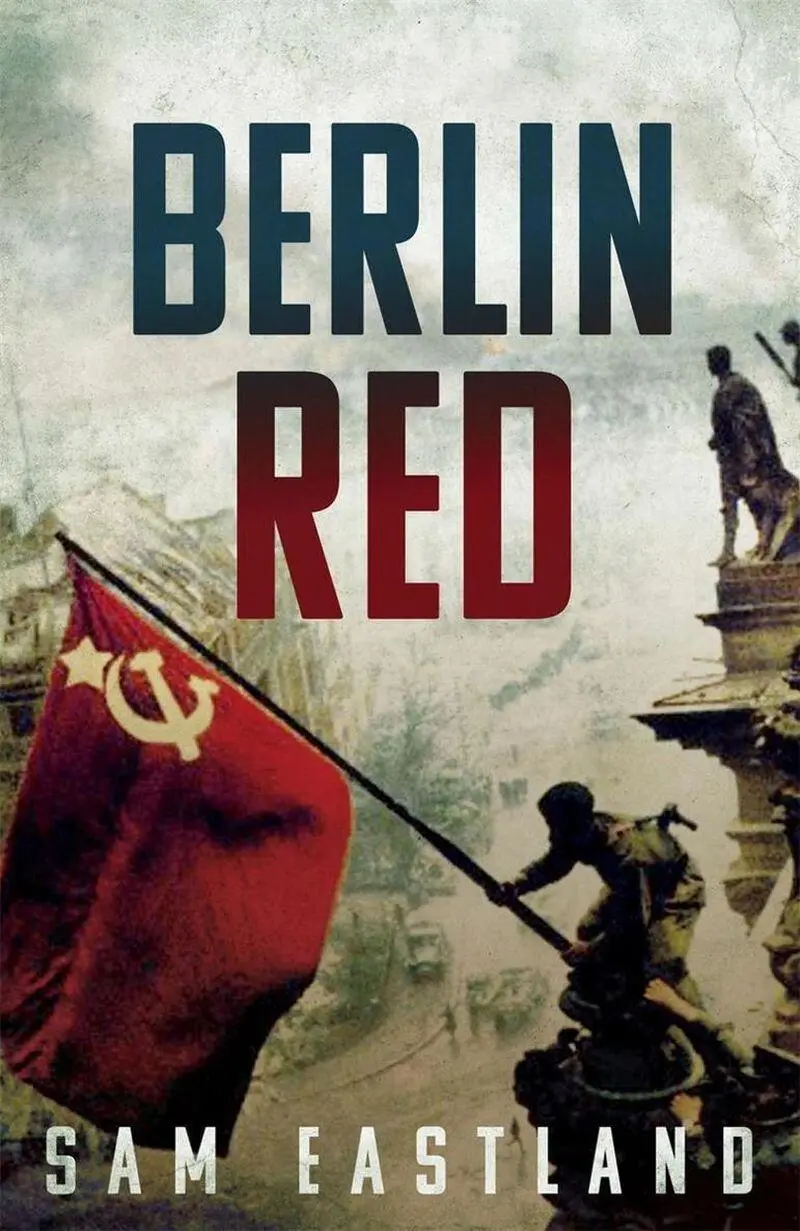
- Название:Berlin Red
- Автор:
- Издательство:Faber & Faber
- Жанр:
- Год:2016
- ISBN:9780571322374
- Рейтинг книги:3 / 5. Голосов: 1
-
Избранное:Добавить в избранное
- Отзывы:
-
Ваша оценка:
Berlin Red: краткое содержание, описание и аннотация
Предлагаем к чтению аннотацию, описание, краткое содержание или предисловие (зависит от того, что написал сам автор книги «Berlin Red»). Если вы не нашли необходимую информацию о книге — напишите в комментариях, мы постараемся отыскать её.
Berlin Red — читать онлайн бесплатно полную книгу (весь текст) целиком
Ниже представлен текст книги, разбитый по страницам. Система сохранения места последней прочитанной страницы, позволяет с удобством читать онлайн бесплатно книгу «Berlin Red», без необходимости каждый раз заново искать на чём Вы остановились. Поставьте закладку, и сможете в любой момент перейти на страницу, на которой закончили чтение.
Интервал:
Закладка:
He wished he could go back in time, to that moment when he had emerged from his bunker and found the young corporal ensnared by the rusting barbed wire. He wished he could have turned his back and walked back down again into the musty earth, leaving the man to be torn to shreds by their own artillery.
The fact that this had even occurred to him, a man who usually confined himself within a world of fact, not dreams, showed him just how powerless he was.
And Hitler knew it, too. Why else would he have dared to meet Hunyadi alone and without his usual escort of armed guards?
Now, in one last attempt to reason with the man, Hunyadi reached out and took hold of Hitler’s arm.
Hitler was startled. Few people ever touched him. Even his mistress seemed to hesitate before allowing her pale flesh to brush against his own, still paler skin.
The dog began to growl, lips curling up around its teeth.
Realising his mistake, Hunyadi let his hand slip away. ‘Listen to me,’ he said. ‘We have been bound together all these years by the debt you think you owe me. Allow me to absolve you of that now. Just let us go, me and my wife, and if you cannot do that, then at least let her go free. Don’t hold this over me. It may well be that we no longer share that friendship, but at least there was a time when we did not think of each other as enemies. I beg you to remember that.’
Hitler stared at him. A look of intense curiosity spread across his face.
For one brief moment, Hunyadi convinced himself that his wish might be granted, after all.
‘The debt I owe you is mine to repay,’ said Hitler. ‘I will decide when the slate has been wiped clean, and I will decide how it’s done.’ He glanced up at the sky. ‘It will be night soon,’ he said. ‘Time for me to head back underground. I will leave you here, Hunyadi. You can find your own way home.’ With those words, Hitler turned and made his way back towards the Chancellery entrance. The dog followed close upon his heels.
As the sun set over the ruins of the city, the brassy evening light suffused with yellow dust, Hunyadi set off towards his flat on the Kronenstrasse. No one seemed to notice him as he shuffled along in his dirty prison clothes. He looked like just another refugee, of which there were thousands roaming the streets in search of shelter and food.
In spite of the fact that Hunyadi had not been home in weeks, he found the door to his apartment still locked and everything inside untouched since the moment of his arrest. The air was musty and still. In spite of the cold, he opened the windows, then sat down at his desk, turned on the light and read through the report Hitler had given him.
When he had finished, he sat back in the chair, laced his fingers together and set his hands on top of his head. For a long time, he just stared at the open window, watching how the night breeze brushed against the curtains. There must be some way out of this, he thought. Lost in the caverns of his mind, he searched for a solution, but there was none. Hunyadi was utterly trapped. There was nothing to do but proceed with the task he had been given.
He returned the envelope of documents to his chest pocket, rose to his feet, breathed in deeply and strode out of the room.
After a short walk across town, he arrived at the Pankow district police station where, up to the moment of his arrest, he had spent his entire career.
The sergeant on duty was surprised to see him. ‘Inspector Hunyadi!’ he exclaimed, ‘I thought . . .’ he hesitated, ‘well, I thought they . . .’
‘They did,’ replied Hunyadi.
The sergeant nodded vigorously. ‘And what can I do for you, Inspector?’
‘I will be requiring my old office.’
‘But I don’t think it’s available,’ spluttered the man. ‘It belongs to Inspector Hossbach now.’
‘Hossbach!’ muttered Hunyadi. An image appeared in his mind of the small, rosy-cheeked man, his face split almost in two by a patently insincere smile. ‘And how long did he wait,’ Hunyadi asked the sergeant, ‘to move into my room after I left?’
The sergeant’s tactful silence was an answer in itself.
Hunyadi climbed up the first flight of stairs and made his way along a stretch of industrial carpeting worn almost bare by the path of his own feet over the years until he reached his office door.
He did not bother to knock.
Hossbach was sitting with his feet up on the desk, reading a monthly magazine called Youth , which passed itself off as a pictorial journal celebrating what it touted as ‘the human body and spirit’ but was, in fact, little more than pornography.
As soon as the door opened, Hossbach tossed the magazine over his shoulder and swept his feet off the desk. He snatched up the receiver of his phone, as if to give the impression that he had been engaged in some important conversation. ‘God damn it to hell!’ he shouted. ‘Didn’t anyone teach you how to knock?’ Then he paused, astonished, the heavy black receiver frozen in his hand. ‘You!’ he gasped.
‘Hossbach.’ It looked for a moment as if Hunyadi was going to say more, but he didn’t, leaving the man’s name to hover in the air like the tone of a lightly struck bell.
‘What are you doing here?’ asked Hossbach, replacing the receiver in its cradle. ‘I thought they shipped you out in chains!’
‘I managed to get loose,’ remarked Hunyadi.
‘So,’ Hossbach narrowed his eyes in confusion, ‘are you back on the force?’
‘Not exactly. I’m doing some work for an old acquaintance.’
‘And you need my help?’ Hossbach wondered aloud.
‘I need you to get out of my office.’
And now the irritating smile began to spread across Hossbach’s face. ‘Well now, Hunyadi,’ he began, ‘I’m just not sure that’s possible.’
Hunyadi removed the envelope from his coat pocket and began to rummage through its contents.
‘What are you doing?’ asked Hossbach.
‘It’s in here somewhere,’ Hunyadi answered vaguely.
‘I’m damned if I’m giving up this office!’ shouted Hossbach, the smile still weirdly bolted to his cheeks.
‘You may well be, at that,’ answered Hunyadi. ‘Ah! Here it is.’ He pulled out a business card, bearing the initials AH, intricately twined into a monogram. Below that was a number, written in black fountain pen. Hunyadi placed the card down on the desk and, with one finger, slid it across to the detective. Then he picked up the phone receiver and handed it to Hossbach. ‘Make the call,’ he said. ‘I’ll be waiting right outside.’
Having returned to the hallway, Hunyadi closed the office door behind him. He breathed in the familiar smell of the office: a combination of cigarette ash, hair tonic, sweat, the eye-watering reek of mimeograph ink and of over-brewed coffee, although Hunyadi doubted that any real coffee had been drunk here in a long time. The air was filled with the clatter of typewriters and the voices of men who smoked too much, none of which he could distinctly hear, so that they merged into a throaty purr whose familiarity Hunyadi found reassuring.
After a few minutes, the door opened and Hossbach stepped into the hall. He was clutching a small orchid in an earthenware pot. His face was utterly white, as if the blood had drained out of his heart like dirty water from a bath. He said nothing as he walked away to find another office, the orchid stem wobbling over his shoulder, as if waving goodbye to Hunyadi.
On the night of 12 April 1945, Kirov, Pekkala and their guide found themselves strapped into uncomfortable metal seats in the unheated cargo bay of a Junkers transport plane.
Pekkala looked around at the aircraft’s curved frame supports, which arched down the bare metal of the interior walls, giving him the impression that he had been swallowed by a whale. Just then, Pekkala could not remember whether the story of Jonah had actually taken place or if it was simply the invention of some long-dead holy man, intended to steer the listener towards some greater truth which now eluded him.
Читать дальшеИнтервал:
Закладка:
Похожие книги на «Berlin Red»
Представляем Вашему вниманию похожие книги на «Berlin Red» списком для выбора. Мы отобрали схожую по названию и смыслу литературу в надежде предоставить читателям больше вариантов отыскать новые, интересные, ещё непрочитанные произведения.











Обсуждение, отзывы о книге «Berlin Red» и просто собственные мнения читателей. Оставьте ваши комментарии, напишите, что Вы думаете о произведении, его смысле или главных героях. Укажите что конкретно понравилось, а что нет, и почему Вы так считаете.