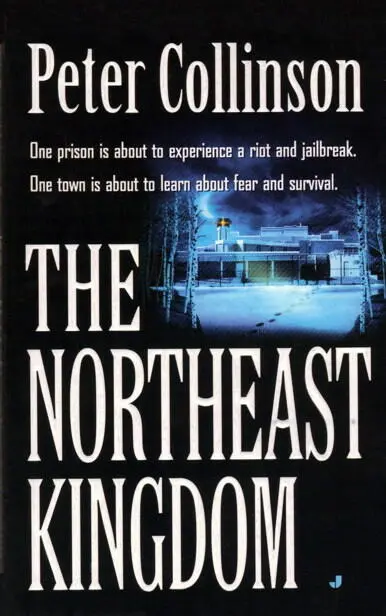
The Kingdom - Peter Collinson
Здесь есть возможность читать онлайн «The Kingdom - Peter Collinson» весь текст электронной книги совершенно бесплатно (целиком полную версию без сокращений). В некоторых случаях можно слушать аудио, скачать через торрент в формате fb2 и присутствует краткое содержание. Город: New York, Год выпуска: 2002, ISBN: 2002, Издательство: Jove, Жанр: Триллер, на английском языке. Описание произведения, (предисловие) а так же отзывы посетителей доступны на портале библиотеки ЛибКат.
- Название:Peter Collinson
- Автор:
- Издательство:Jove
- Жанр:
- Год:2002
- Город:New York
- ISBN:978-0-515-13361-5
- Рейтинг книги:4 / 5. Голосов: 1
-
Избранное:Добавить в избранное
- Отзывы:
-
Ваша оценка:
Peter Collinson: краткое содержание, описание и аннотация
Предлагаем к чтению аннотацию, описание, краткое содержание или предисловие (зависит от того, что написал сам автор книги «Peter Collinson»). Если вы не нашли необходимую информацию о книге — напишите в комментариях, мы постараемся отыскать её.
In the upland hills of Vermont sits the small town of Gilchrist, the scenic heart of the Northeast Kingdom region. It’s also home to a high-tech twenty-first century Alcatraz — America’s most advanced maximum-security penitentiary. When the riot erupts, no one is surprised. When the break comes, no one is prepared.
NO EXIT
Gilchrist is under siege and outnumbered. All communication with the outside world has been terminated by a violent winter storm. All escape routes are guarded by the most vicious prisoners in the country. And trapped in a local inn, the town’s few survivors are left with only one recourse: to run for their lives.
NO MERCY
But fleeing into the rugged timberland is little refuge for these desperate few. They are cold, defenseless, and worse: They are being tracked by a relentless killer who has nothing left to lose.
Peter Collinson — читать онлайн бесплатно полную книгу (весь текст) целиком
Ниже представлен текст книги, разбитый по страницам. Система сохранения места последней прочитанной страницы, позволяет с удобством читать онлайн бесплатно книгу «Peter Collinson», без необходимости каждый раз заново искать на чём Вы остановились. Поставьте закладку, и сможете в любой момент перейти на страницу, на которой закончили чтение.
Интервал:
Закладка:
“He left this for us. He wanted us here.” Inkman jumped to his feet. “He could be outside right now.”
Trait pushed him back into the chair. “He’s not. We were too careful.”
“If he’s here in town, then he’s not just coming after me. Do you understand that? He’s coming after all of it — the town, you, everything.” Inkman looked again at the bodies and the writing. “He wants you to go after him. I’m telling you: Don’t.”
“I won’t. Not tonight, not in the dark. But tomorrow. We will put an end to this tomorrow.”
Trait signaled to Spotty to admit the remaining Marielitos. The burn hole in Octavio’s forehead had stopped smoking, and the snowmobiles idling outside had masked the revolver’s report.
Trait met the four at the edge of the carpet. Four middle-aged Cubans coming off twenty years of U.S. incarceration, their eyes were bright as they tried to see around him into the room, skin tanned, builds tight and compact. Trait nodded solemnly and allowed them inside.
The Marielitos shouted words of anguish and one man gripped the shoulder of another as they viewed their fallen comrades. Their eyes glared with rage.
“Your brothers-in-arms were ambushed,” Trait told them. “We have a handful of citizens who foolishly decided to hide in town. Your brothers killed at least two.”
The one who spoke English turned to Trait, his top lip curled in fury. “Faces,” he said.
Trait glanced at Inkman. “There might be one among them who knows torture and revolt.”
The man translated this to others, furiously, before turning back to Trait. “Where they go?”
“The snow will keep them slow tonight. They can’t go anywhere except deeper into town. You will have your day. I promise you an opportunity for vengeance.”
“No,” said the spokesman, the smallest and angriest of the four Marielitos. “We promise you.”
The fourth day
Chapter 15
It was hours before dawn at the farmhouse they had broken into. The lingering stink of cigarette smoke and the childproof catches on the lower kitchen cabinets were the only signs of an adult ever having been in residence. At some point children and pets had taken over. Food was ground into the shag carpeting, toys lay overturned on the stairs, and a handprint smudged the bottom third of every wall and door. So lived-in was the house that the absence of little voices and the tapping of paws brought out for Rebecca the deathlike stillness of the town.
Rebecca had been paired with Coe for the hour’s journey from the country club, sitting against his back as they ran without headlights along property lines and iced fences, slipping across the countryside like field mice. He had worked the sled hard through the unspoiled snow like a dirt bike in soft sand, while she had been vigilant for prisoners.
Once they reached the house, Kells made each of them take a turn tooling around the yard behind the barn before letting them rest. Rebecca found the sled easy to operate, less like a motorcycle than a moped. Kells explored the barn, silo, and dairy stables while Rebecca took the first watch at the upstairs windows, too distracted to sleep. She understood why he liked the location of the farmhouse — the view from the front looked west over a mile of fields, as far as they could see through the falling snow — but Rebecca found it too inviting and open. She thought of all the questions she wanted to ask Kells, but when he came to relieve her she had been crying, and she hid her face and said nothing as she returned downstairs.
The scent of dog urine puffed out of the rocking chair cushion as Rebecca sat in the playroom, bundled in her coat and a pair of ski pants she discovered in the downstairs closet. She tried to stay warm as she listened to Kells’s boots on the creaky floor above. Mia sat unmoving on the small sofa, wrapped in a heavy sage-green quilt, her sad, vague gaze boring a hole of memory in the jelly-stained wall. Dr. Rosen sat in a corner scribbling on country club stationery, presumably a letter to his wife. Young Coe fought sleep like a little boy, embarrassed as he roused himself from dozing, only to blink and nod off again.
Rebecca found herself neither tired nor hungry. As she had learned in the days following the breakup of her marriage, the human body needs little to sustain itself when overstimulated emotionally. Fear piled up like the snowdrifts outside.
Later the footfalls changed overhead, as Tom Duggan relieved Kells. Boots came down the stairs, a refrigerator opened, glass clinked, light glowed in the kitchen. The refrigerator door light went out and a chair scraped linoleum. Coe jerked awake as Rebecca stood, but she waved him back to sleep.
The kitchen was dark-paneled and dim around a deeply scored central island. The red vinyl backs of the kitchen table chairs were cat-clawed and oozing cushion foam. Blood throbbed in her head as she watched the manslayer, Kells, drinking water and plucking sardines from an open tin, eating them one by one.
He saw her there and slid his meal toward her. “Protein,” he said.
She declined. He switched on a small, sticky television and they watched footage from the ADX Gilchrist video feed. The prisoners lay in the corridors and on cell beds, coughing without sound, their hands pulling at their throats.
The Cuban’s police radio was coiled in front of Kells like a snake, hissing occasionally. Kells popped another sardine in his mouth, swallowing it back like medicine, and she did not fear him. She sat down.
“Why haven’t you contacted anyone at Doomsday?” she asked him.
“Because it’s better if they don’t know I’m here. That way they can’t ask me to stop.”
“That agency is only about two years old, I think. What did you do before that?”
“I was with the Department of State.”
His precise wording was telltale. “The CIA,” she said.
Kells ate a sardine.
“In Cuba?” she said.
“For a brief time. Mainly in Central America.”
“How many years total?”
“Twenty-one.”
“That’s how you know about Inkman. You’re retired?”
“Doomsday is a second career.”
“What did you do for them in Central America?”
“Embassy work. Diplomatic cover. Cold recruiting, handling.”
“Embassy work?” she said, unbelieving. “You learned how to do what you did to those men’s faces in an diplomacy school?”
Kells took a long drink of water from a plastic Rugrats cup. “These Marielitos are a bad bunch. That’s why Trait kept seven alive for himself. He has four left, and he’ll have to work to keep them happy. The convict said the others’ deaths would be avenged. Disrespecting the corpse, that’s a cultural thing. We need to make these convicts crazy.”
“You have a plan,” she said. “I think you’ve had a plan the entire time.”
“Running straight at Trait will get us nowhere. You’ve researched him, you know that. Inkman — Hodgkins, as you knew him — he is the weak link.”
“The Cuban told you this?”
“No one told me this, I know it myself. Inkman is no hardened criminal like these others. He’s a bitter bastard who thought he had pulled off the crime of the century and now knows he’s in this thing way over his head. These aren’t his people. He’s used to liaising with corrupt generals over lemonade, running countries by remote control. Inkman is vulnerable here, and Trait is vulnerable through him. They’ve made the inn their headquarters.”
Rebecca was shocked. The inn.
“There and the police station,” Kells went on, “where most of the weapons are stockpiled. We’re up against about fifty men — thirty prisoners and roughly twenty ex-cons. They have the center of town all sealed up and the access roads barricaded.”
Читать дальшеИнтервал:
Закладка:
Похожие книги на «Peter Collinson»
Представляем Вашему вниманию похожие книги на «Peter Collinson» списком для выбора. Мы отобрали схожую по названию и смыслу литературу в надежде предоставить читателям больше вариантов отыскать новые, интересные, ещё непрочитанные произведения.







Обсуждение, отзывы о книге «Peter Collinson» и просто собственные мнения читателей. Оставьте ваши комментарии, напишите, что Вы думаете о произведении, его смысле или главных героях. Укажите что конкретно понравилось, а что нет, и почему Вы так считаете.