Nicci French - The Memory Game
Здесь есть возможность читать онлайн «Nicci French - The Memory Game» весь текст электронной книги совершенно бесплатно (целиком полную версию без сокращений). В некоторых случаях можно слушать аудио, скачать через торрент в формате fb2 и присутствует краткое содержание. Жанр: Триллер, на английском языке. Описание произведения, (предисловие) а так же отзывы посетителей доступны на портале библиотеки ЛибКат.
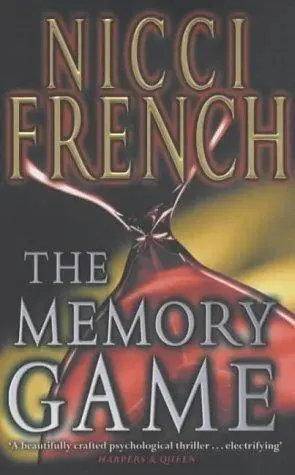
- Название:The Memory Game
- Автор:
- Жанр:
- Год:неизвестен
- ISBN:нет данных
- Рейтинг книги:4 / 5. Голосов: 1
-
Избранное:Добавить в избранное
- Отзывы:
-
Ваша оценка:
The Memory Game: краткое содержание, описание и аннотация
Предлагаем к чтению аннотацию, описание, краткое содержание или предисловие (зависит от того, что написал сам автор книги «The Memory Game»). Если вы не нашли необходимую информацию о книге — напишите в комментариях, мы постараемся отыскать её.
The Memory Game — читать онлайн бесплатно полную книгу (весь текст) целиком
Ниже представлен текст книги, разбитый по страницам. Система сохранения места последней прочитанной страницы, позволяет с удобством читать онлайн бесплатно книгу «The Memory Game», без необходимости каждый раз заново искать на чём Вы остановились. Поставьте закладку, и сможете в любой момент перейти на страницу, на которой закончили чтение.
Интервал:
Закладка:
‘How did I do? Did I pass?’
When Alex replied, he was more serious than I’d ever heard him before.
‘It has been said that if you answer positively to more than half a dozen or so of the questions I put to you, then this may be evidence of a submerged trauma.’
‘What do you mean “submerged”?’
‘An event, or a series of events, that you have made yourself forget.’
‘Come on, Alex, the things in that list of questions could apply to anybody. Who on earth wouldn’t say yes to some of them?’
‘Don’t try to brush this off, Jane. You’ve gone along with this very conscientiously until now. The questions are carefully constructed to uncover symptoms of anxiety which may be evidence of something deeper. I’m not making a diagnosis but it’s something we ought to think about. Tell me, Jane, you’ve been putting yourself back into the landscape from where Natalie disappeared. You’ve been doing it with great commitment. I’m very impressed. But tell me, what does that landscape make you feel? Does it give you any feeling of dread? Do you feel that there is something there? Something hidden?’
I suddenly felt cold, lying there on the couch, as I always do when I lie still for an extended period of time, even in a well heated house such as Alex’s. It was my bad circulation again.
‘Yes, it scares me. What is it that interests you about it, Alex?’
‘I’ve always tried to follow your lead, Jane. I asked you about Natalie’s disappearance and you gave me a landscape. I want to send you into that landscape and see what you find. Does that seem worth trying?’
‘Yes, all right.’
So we went through our familiar ritual. I felt pleased with Alex’s approval, as if I was becoming his star pupil. He talked softly to me. My body relaxed, I closed my eyes and placed myself back there beside the Col. Session by session, this was becoming easier and the world in which I found myself was each time more vivid.
I was sitting down, my back resting on the dry mossy stone at the foot of Cree’s Top, the river on my left flowing away, the last screwed up pieces of paper floating round the curve, the elms on the edge of the woods to my right.
Without any prompting I was able to stand up and turn round. The river was now on my right flowing towards me and away behind me, the elms and the woods were on my left. Now I was looking at the path winding up the slope of Cree’s Top. There were thick bushes by its side, and it occasionally disappeared from view as it snaked its way up the slope, but I could see almost all of it. It was all more vivid than before. The leaves were greener and more defined against the sunlight from above. As I moved my head round I could focus on any part of my surroundings and move in on them, on to the small stones on the path that had been pushed to the sides by the passage of feet that had also worn the ground down, exposing larger stones and the roots of trees. Almost without an impulse on my part I started to step forward along the path. Looking down, I saw my feet wearing black gym shoes of a kind I hadn’t owned since I was at school. I was now well along the path and moving up the hill and away from where I had been sitting. When I turned to my right, I was looking down the slope at the river. When I turned to my left, I was looking into the woods towards the Stead. Suddenly all became dark. I looked up and a heavy black cloud was passing overhead. The air turned cold, a shiver passed through me and I turned and ran down the hill. I carefully sat myself in my original position, the stone crusty against my spine.
I described to Alex what had happened.
‘Why didn’t you go on?’
‘I was afraid.’
‘Big girls don’t need to be afraid.’
Nineteen
‘Yes.’
‘May I speak to Jane Martello, please.’
‘Yes, what is it?’
I wasn’t in a good mood. This would be the fourth time in one morning that someone from the council had rung me about changes to the hostel. The next day, the committee was going to meet to give the go-ahead – or not – to the revised budget for a building that had already been so cut back, compromised and revised that I hardly wanted my name attached to it any more.
‘Jane, this is Caspar, Caspar Holt.’
‘What?’
‘It wasn’t necessary, but thank you for your postcard.’
It was the philosopher. I sat down, and breathed deeply.
‘Oh, yes, well, I wanted to apologise for my behaviour that evening.’
‘In the circumstances, I think that you behaved with aplomb. I wondered if you’d like to meet?’
Oh God, a date.
‘Um, fine, I mean, when did you have in mind?’
‘How about now?’
‘Now?’
‘Well, in half an hour, then.’
I needed to sort out the final details for the next day’s committee meeting, I needed to go to the office, I desperately needed to wash my hair. It wasn’t a good day; it was my day for a rush and a sour bad mood.
‘Give me an hour. Where shall we meet?’
‘Number thirteen, Lincoln ’s Inn Fields. I’ll meet you outside.’
I didn’t manage to sort out the committee details or phone the office. But I did wash my hair.
He was standing outside wearing the same bulky tweed coat he had worn at the ICA. He was engrossed in a paperback book so I was able to observe him before he saw me. His hair was ash-blond, long, curly and swept back off his forehead. He had round wire-framed glasses.
‘Sir John Soane’s Museum,’ I said to him. ‘Is this where you usually take girls on their first date?’
He looked up in surprise.
‘Yes, it probably explains my luck with women. But it’s free and it’s like walking around inside a man’s brain.’
‘Is that good?’
He put his hand lightly on my shoulder as we went through the front door, and into the strange interior, the space extending into the upper floors and down into the basement. He steered me into a room that was painted a dark rusty red. There were strange objects, architectural fragments, archaic instruments, eccentric works of art on every surface.
‘Look at that,’ said Caspar, pointing out something shapeless. ‘That’s a fungus from Sumatra.’
‘A what?’
‘Actually, it’s a sponge.’
We walked on through improbably tiny corridors giving on to sudden even more improbable vistas, up and down, everything lined with a baffling array of objects.
‘Each room is like a separate part of the mind that planned it,’ he said. I noticed his hands were splashed with red paint at the knuckles, and his shirt collar was frayed.
‘Like a man’s brain, perhaps,’ I said.
He smiled. ‘You mean compartmentalised. Full of objects. Maybe. Maybe you’re right. It’s not a woman’s house, is it? I come here sometimes at lunchtime. I marvel at how a lifetime can be packed into a house. It’s such an introverted place, don’t you think? And extroverted as well, of course.’
‘Is this your standard lecture?’ I asked.
‘Sorry, am I irritating you?’
‘I was only joking.’
We went upstairs, into the high picture room painted green and deep saffron yellow. The winter sun flooding in through the arched windows illuminated the dull, rich colours; the room felt cool and grave as a church. We walked together along Hogarth’s The Rake’s Progress , all that savagery and anger. Caspar paused in front of ‘The rake in Bedlam’.
‘Look,’ he said. ‘By cell fifty-five, that man with a sceptre and a pot on his head, he’s urinating. Can you see the look on the faces of those two fashionable ladies?’
I peered at the grotesque scene, making out dim and writhing figures, and shivered.
‘It’s Bethlehem Hospital, Bedlam. It was in Moorfields, just outside the city wall. Hogarth’s father was in prison for debt, it made a great impression on him. Look at the face of that old woman on her knees, Jane, she seems only half-human.’
Читать дальшеИнтервал:
Закладка:
Похожие книги на «The Memory Game»
Представляем Вашему вниманию похожие книги на «The Memory Game» списком для выбора. Мы отобрали схожую по названию и смыслу литературу в надежде предоставить читателям больше вариантов отыскать новые, интересные, ещё непрочитанные произведения.


Обсуждение, отзывы о книге «The Memory Game» и просто собственные мнения читателей. Оставьте ваши комментарии, напишите, что Вы думаете о произведении, его смысле или главных героях. Укажите что конкретно понравилось, а что нет, и почему Вы так считаете.