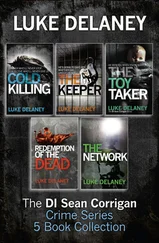
Jason Elliot - The Network
Здесь есть возможность читать онлайн «Jason Elliot - The Network» весь текст электронной книги совершенно бесплатно (целиком полную версию без сокращений). В некоторых случаях можно слушать аудио, скачать через торрент в формате fb2 и присутствует краткое содержание. Жанр: Триллер, на английском языке. Описание произведения, (предисловие) а так же отзывы посетителей доступны на портале библиотеки ЛибКат.
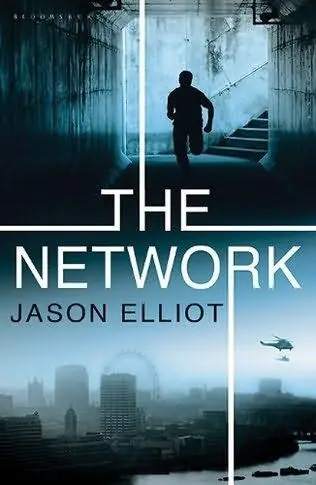
- Название:The Network
- Автор:
- Жанр:
- Год:неизвестен
- ISBN:нет данных
- Рейтинг книги:4 / 5. Голосов: 1
-
Избранное:Добавить в избранное
- Отзывы:
-
Ваша оценка:
The Network: краткое содержание, описание и аннотация
Предлагаем к чтению аннотацию, описание, краткое содержание или предисловие (зависит от того, что написал сам автор книги «The Network»). Если вы не нашли необходимую информацию о книге — напишите в комментариях, мы постараемся отыскать её.
The Network — читать онлайн бесплатно полную книгу (весь текст) целиком
Ниже представлен текст книги, разбитый по страницам. Система сохранения места последней прочитанной страницы, позволяет с удобством читать онлайн бесплатно книгу «The Network», без необходимости каждый раз заново искать на чём Вы остановились. Поставьте закладку, и сможете в любой момент перейти на страницу, на которой закончили чтение.
Интервал:
Закладка:
The bin Laden I know from the cables and reports I’ve read over the previous year bears no resemblance to the man Jameela describes. The impression of a bloodthirsty mastermind simply doesn’t tally with the diffident, almost shy man she knows from family meetings and parties. He’s known to his admirers as a quiet philanthropist, sponsoring construction projects in Sudan and encouraging wealthy Saudi friends to invest in farming and real estate there. But those who knew him better, says Jameela, observed a man going through changes.
The unworldly teenager she’s described is marked by a single overwhelming experience: his involvement with Afghanistan. It’s there, after living and fighting among Afghan mujaheddin during the Soviet occupation, that his life is given a different direction. He becomes passionate about supporting the Afghans in their struggle against their invaders, and puts his personal fortune to work sponsoring camps, hospitals and a support network for Afghan fighters and their relatives. Like so many others, he simply falls in love with the place.
The simplicity and austerity of life in Afghanistan leaves a deep mark on him. When he returns to Saudi, he sees his own country through different eyes: a place run by corrupt and worldly men who care little for the true face of Islam. It is this true face that he has encountered in Afghanistan. He works against the Saudi regime, and when American troops arrive on Saudi soil for the Gulf War he calls for the overthrow of the royal family. He wins friends in low places and is forced to leave his homeland.
He’s hounded from country to country, and settles in Khartoum. A puritanical hardness has entered him. He bans music in his household and puts his teenage sons through hard physical tests. Two years after his arrival in Sudan the Saudis strip him of his citizenship and freeze his assets. Around him circulates a loyal entourage of ‘Arab Afghans’ from the days of the jihad in Afghanistan, and their agenda becomes increasingly political. A few of them take an interest in steering bin Laden in a new and more violent direction, simultaneously nurturing his grievances and idealism in accordance with their own more cynical agendas. By the time bin Laden is expelled from Sudan and returns to Afghanistan in 1996, he has fallen entirely under their spell, espousing a new kind of global jihad which makes no distinction between its targets and their civilian subjects. Jameela lists the names of his radical associates with contempt, calling them cold-hearted hypocrites who have brought shame on Islam, men who exploit the legitimate grievances of ordinary people for their own violent ends. She tells me the names of the organisations they use and of the places in Khartoum where she thinks they sometimes meet. With other men, she says, suffering leads to goodness. But not with these ones.
By the time she’s finished I’ve filled a dozen pages. When she leaves in the morning I rewrite them using the pen supplied to me by Seethrough and the pad of water-soluble paper that he’s shown me how to use with it. Double spaced and in capital letters. Then I press the blank sides of a twenty-page United Nations de-mining report against each page in turn, and press them together for several minutes as the invisible dye contained in the ink of my report transfers to the blank sheets. Even under a microscope, there is no physical disturbance to the fibres of the paper, and the ink is virtually undetectable using chemicals. Then I re-staple the pages, and the result is what looks like an ordinary printed document, together with a scribbled covering note, sealed into an envelope addressed to a Mr Halliday of the British embassy. I burn my original notes in the kitchen sink, then run the tap over the sheets of my finished report. They dissolve within seconds into a translucent sludge. Then I throw a single unused sheet which I didn’t need into Jameela’s waste-paper bin. It misses by a tiny fraction, and bounces from the rim onto the floor.
I wonder, now, about such things.
A piece of paper, crumpled into a ball and propelled by the force transferred by the muscles of my hand and arm, tumbles through the air. Its direction and speed is in turn influenced by the immeasurably smaller forces that act on it from the air through which it passes. The resulting momentum, partially dissipated by the metal lip of the waste-paper bin, determines its final position, a few inches from the edge of the wall under Jameela’s dresser. And this tiny deviation from its intended goal, of which the paper itself cannot possibly be conscious, prompts me to stand up and retrieve it from the floor with the intention of putting it into the bin where I had hoped it would land. But as I lean down to pick it up, something catches my eye.
On the floor tile at the base of the wall under the dresser where the paper has ended its flight is a tiny mound of white powder. It must be recent, otherwise it would have blown away or been swept away by now, and I can’t help but wonder where it comes from. It’s the kind of mound generated by making a small hole in a wall with an electric drill. I smell it. It’s plaster dust. I look up to see where such a hole has been made, bemused at the same time by the habit of my own curiosity. An oil painting hangs directly above the dresser. It’s a sample of raw but striking art from a local painter, depicting half a dozen women in brightly coloured tobes carrying pots of water on their heads. The dust, I reason, must come from the hole made to hang the painting. But this would have been made months or even years before, and no trace would be left today.
The dust, I decide, comes from a hole in the wall which is actually above the frame of the painting. I haven’t noticed it before because it’s just a few millimetres across and just above the frame. But this is the puzzling thing: the dust made by the drilling of the hole hasn’t fallen onto the frame of the painting but onto the floor instead, which suggests that the painting was removed when the hole was made. None of which would have the slightest significance, had I not, out of curiosity, run my finger over the hole, which turns out not to be a hole at all but a slightly convex bump. It’s the wide-angle lens of a covert fibre-optic surveillance camera.
It’s not exactly a three-pipe problem, but it does raise questions. If the hole was made from the side I’m on, there’s the question of who made it. I can’t really picture Jameela with a covert entry and surveillance kit, so it’s probably been made by someone who’s got access to the other side of the wall. Whoever it is has a strong reason for wanting a camera that looks into Jameela’s bedroom, and provides a panoramic view of the bed on which I’ve spent a good part of the preceding week with her.
It strikes me, the following morning at 5 a.m. as I’m about to break into the neighbouring apartment, that I’m here because of the irregularity in the flight of a ball of paper. Which suggests to me that large events are determined, at least in part, by smaller events, and those in turn by even smaller ones. Following this idea to its extreme is problematic, because you end up with the vibration of atoms determining every measurable event; and if everything really is determined, no action has any significance other than its own unfolding, and one may as well stay in bed. Thinking of the flare of Jameela’s hips beneath the slimness of her waist, staying in bed does indeed seem like the most sensible thing. But I know intuitively that the apparently random position where my sheet of paper came to rest and the sense of foreboding I felt on seeing the giant haboob are somehow connected. Not by scale, but by their significance.
My lock picks live in a panel of my wallet that only the most diligent search would uncover. They are made from a high-tensile ceramic coated with tungsten carbide and are much stronger than steel but have no detectable metal content. The six picks are black, and moulded, like the pieces of an Airfix model, into a panel the size of a credit card with a thin plastic cover, which I now slide off and twist out the tension wrench. I put the short end into the keyway, using my third finger to apply pressure and resting the other two gently on its length. With the other hand I use the snake pick to lift all the pins in one go, listening as they snap down when the pressure from the tensioner is released. Five tiny clicks tell me it’s a five-pin right-handed lock.
Читать дальшеИнтервал:
Закладка:
Похожие книги на «The Network»
Представляем Вашему вниманию похожие книги на «The Network» списком для выбора. Мы отобрали схожую по названию и смыслу литературу в надежде предоставить читателям больше вариантов отыскать новые, интересные, ещё непрочитанные произведения.


Обсуждение, отзывы о книге «The Network» и просто собственные мнения читателей. Оставьте ваши комментарии, напишите, что Вы думаете о произведении, его смысле или главных героях. Укажите что конкретно понравилось, а что нет, и почему Вы так считаете.