Jason Elliot - The Network
Здесь есть возможность читать онлайн «Jason Elliot - The Network» весь текст электронной книги совершенно бесплатно (целиком полную версию без сокращений). В некоторых случаях можно слушать аудио, скачать через торрент в формате fb2 и присутствует краткое содержание. Жанр: Триллер, на английском языке. Описание произведения, (предисловие) а так же отзывы посетителей доступны на портале библиотеки ЛибКат.
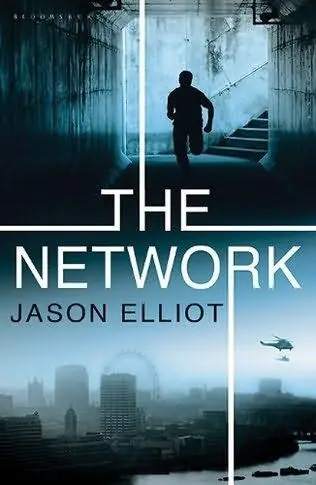
- Название:The Network
- Автор:
- Жанр:
- Год:неизвестен
- ISBN:нет данных
- Рейтинг книги:4 / 5. Голосов: 1
-
Избранное:Добавить в избранное
- Отзывы:
-
Ваша оценка:
The Network: краткое содержание, описание и аннотация
Предлагаем к чтению аннотацию, описание, краткое содержание или предисловие (зависит от того, что написал сам автор книги «The Network»). Если вы не нашли необходимую информацию о книге — напишите в комментариях, мы постараемся отыскать её.
The Network — читать онлайн бесплатно полную книгу (весь текст) целиком
Ниже представлен текст книги, разбитый по страницам. Система сохранения места последней прочитанной страницы, позволяет с удобством читать онлайн бесплатно книгу «The Network», без необходимости каждый раз заново искать на чём Вы остановились. Поставьте закладку, и сможете в любой момент перейти на страницу, на которой закончили чтение.
Интервал:
Закладка:
Jameela finishes loading the boat and throws a look of contempt at the men.
‘They would have killed us,’ she says in a frightened voice. Then she shouts something at them in what I suppose is Amharic and probably a curse.
‘Want to shoot them? The sharks will be happy if you do.’ I offer Jameela the AK, guide her hand to the grip and the trigger, and point out the foresight for her to line up on her cowering targets.
‘They would have killed us,’ she repeats.
‘Women with guns.’ I shrug my shoulders at them as if the decision is out of my hands. ‘Scary, isn’t it?’
They’re not laughing.
We move out of the shallows and throttle up the engines. The two stranded men are stooping over their boat as we gain distance. Jameela sits next to me, gripping me in silence and looking back from time to time as we race across the water. At the halfway point I pass the AK to Jameela. I’d love to keep the weapon, but it would be hard to explain. She flings it into our foaming wake and returns to my side.
The first moments of intimacy are never really equalled. She hasn’t tidied up the rose petals, and their perfume wraps itself over us as we fall onto the bed and submit to the momentum that feels as though it was set in motion the instant we first saw each other. A frontier rushes beneath us as if we are entering territory new to us both, and where before there has always been restraint, there is now abandon.
Her skin is still salty and smells of the sea, like a mermaid who has miraculously survived the journey ashore. She laughs, weeps and laughs again, grips me repeatedly with unexpected force, then gives way again as if her body has returned to liquid and been reclaimed by the sea. I have never given myself so fully before, nor received so generously.
I wake in the night with a shock, as if roused by a gunshot. The shots I fired on the beach have been carried into my dream. Somewhere a dog is barking. Jameela is asleep next to me like a baby, half-wrapped in a sheet. I go to the bathroom to drink from the tap and notice the pattern made by all the sand washed off our bodies in the shower. Then I retrieve the satellite phone and step onto the balcony, where the air smells of dust and jasmine. I prepare a coded sitrep for Seethrough and thank him for his part in the arrangements of the previous day. I’m not really expecting an immediate reply and I’m just sitting in the silence thinking of Jameela when I see the blinking light in the phone display that signals his reply: your reference ‘pirates’ not understood please confirm.
And it’s only after about a minute of thinking this over that it really hits me.
I see Jameela every day, and return to her home with her after she’s finished work. The hours of daylight are spent in anticipation of the hours of darkness, when we can travel ever deeper into the territory of intimacy that has opened itself to us. I planned nothing of this when we first met. But now it has us in its grasp and we are powerless against it, and care nothing about where it will take us.
The elements themselves seem to be conspiring in our favour. One afternoon Jameela calls to say she’s returning home early. I drive to her apartment to meet her, and we sit on her balcony, where the air smells so strongly of jasmine, and drink cold white wine. I notice that the sky seems darker than it usually is and wonder if a storm is coming in.
‘Not a storm,’ says Jameela, as if she knows something I don’t. ‘Come.’
We climb to the roof by some narrow brick stairs and she points over the rooftops. Beyond the river to the west, rising out of the desert beyond Omdurman, is a sight I’ve never even imagined. A billowing wall of sand, a thousand feet high I’m guessing, is rolling towards the city. It stretches for what must be miles, an opaque, boiling, blood-orange wave, creeping visibly towards us. The scale of it is stupendous, like a biblical plague. The outline of the city seems puny against the advancing bulk of sand, and the sky grows darker as it nears as if under the command of an irritated god. I have no idea what will happen when it reaches us.
‘Have you seen this before?’
‘It’s a haboob.’ She smiles. ‘The desert’s way to clean itself. It’s beautiful.’
It’s a magnificent reminder of the scale on which nature prefers to do things. We watch its course for a few minutes. Its beauty is inescapable. But as I look at it I feel more than anything a sense of foreboding, as if a kind of reckoning is about to unfold. It signifies only danger to me. Then I turn to Jameela and see her beauty and am reminded how often beauty and danger can be found close together, and the symmetry of the moment seems complete.
‘It will pass,’ she says. ‘We should go inside.’
We leave the roof and return inside, and close the doors and windows of the apartment in turn. The sky darkens even more. We can smell the sand as the haboob advances into everything, suffocating even the daylight and robbing the world outside the windows of colour like an eclipse of the sun. We retreat to the bedroom and make love once more as if to take shelter in one another, celebrating our intimacy in defiance of the affliction visited on the city beyond us.
Later, lying against each other in the muted light, feeling as though we’ve survived a natural disaster, Jameela speaks, prompting me to wonder whether she can read my thoughts. She faces away from me and asks quietly if I am awake.
‘I know you are a spy,’ she says. ‘I don’t care.’
‘I’m not a spy,’ I tell her.
There’s a long silence. She’s not happy with my answer.
‘But I do know people who are.’
‘They sent you here?’
‘Yes.’
‘To spy on me?’
‘No.’ Lie. ‘My meeting you has nothing to do with that.’
‘What do they want?’
‘To find out about bin Laden and his people.’
‘From me?’
‘No. From anybody.’ Lie.
Another long silence.
‘I knew sooner or later somebody would come,’ she says.
She rolls over, looks into my face without speaking and runs her finger across my eyebrows, my nose, my lips.
‘I didn’t want this to happen,’ she says.
I omit no detail of what she tells me, writing for reasons of security at a glass table from which the imprint of my pen can’t be lifted, and with a single sheet of paper at a time. She begins with the story of her husband, one of bin Laden’s many half-brothers, and describes her marriage in Khartoum six years before and her early meetings with his family members at parties and gatherings. She names the dozen other bin Laden brothers she has met, and describes their prosperous lifestyles, their homes in California and London, their love of business, racehorses, boats and cars. These are not the profiles I’m really expecting. Bin Laden himself, she says, is one of the few brothers who lacked the family’s love of wealth, perhaps because he’s the only child of his father’s tenth wife and lost his father when he was a teenager. Much of this, she says, she knows from her husband, who worked on the periphery of bin Laden’s circle, helping to raise money for his projects in Sudan. Her husband is a good man, she says, but fell under the spell of the extremists who formed bin Laden’s closest associates. I’m guessing that this is one of the reasons for their separation but I don’t ask.
Bin Laden has been in Sudan for several years when she meets him, not long after what is said to have been an attempt on his life by the Sudanese authorities, acting on instructions from powerful Saudis who are hoping to silence bin Laden’s criticisms of the Kingdom. It’s in Sudan, says Jameela, that he acquires a penchant for black women, and has a string of Sudanese girlfriends. Can’t really blame him for that, I’m thinking. His other great fondnesses are for earth-moving machinery and hunting with falcons. He also has an incongruous love of growing sunflowers.
Читать дальшеИнтервал:
Закладка:
Похожие книги на «The Network»
Представляем Вашему вниманию похожие книги на «The Network» списком для выбора. Мы отобрали схожую по названию и смыслу литературу в надежде предоставить читателям больше вариантов отыскать новые, интересные, ещё непрочитанные произведения.







Обсуждение, отзывы о книге «The Network» и просто собственные мнения читателей. Оставьте ваши комментарии, напишите, что Вы думаете о произведении, его смысле или главных героях. Укажите что конкретно понравилось, а что нет, и почему Вы так считаете.