Хилари Боннер - Dreams of Fear
Здесь есть возможность читать онлайн «Хилари Боннер - Dreams of Fear» весь текст электронной книги совершенно бесплатно (целиком полную версию без сокращений). В некоторых случаях можно слушать аудио, скачать через торрент в формате fb2 и присутствует краткое содержание. Город: London, Год выпуска: 2019, ISBN: 2019, Издательство: Severn House, Жанр: Криминальный детектив, Триллер, на английском языке. Описание произведения, (предисловие) а так же отзывы посетителей доступны на портале библиотеки ЛибКат.
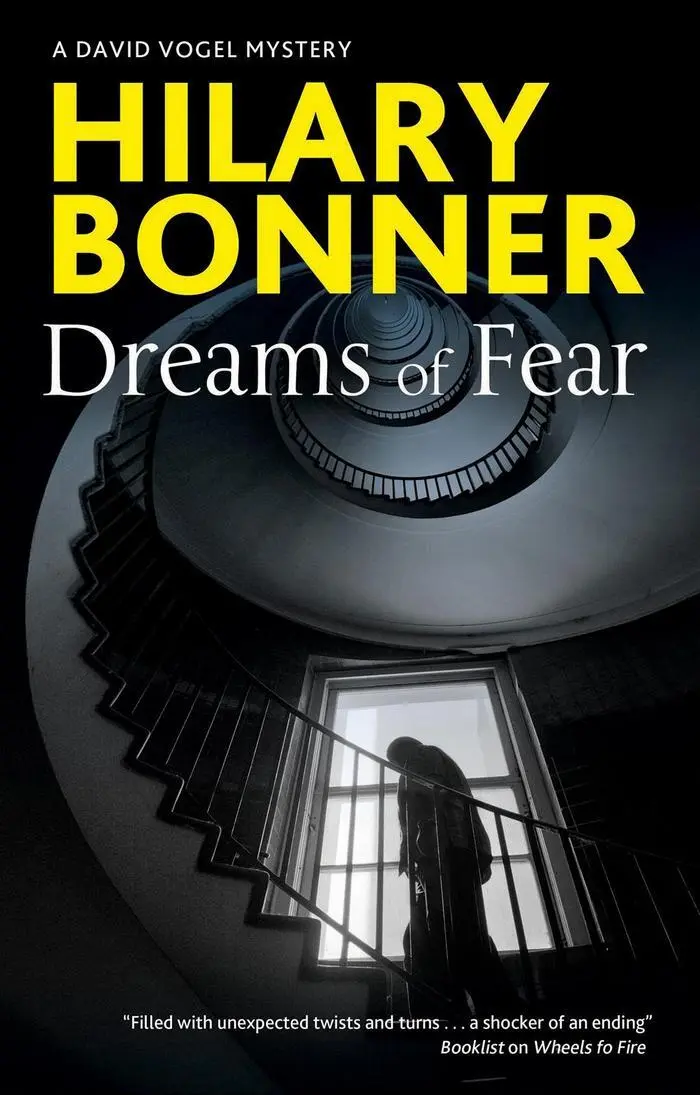
- Название:Dreams of Fear
- Автор:
- Издательство:Severn House
- Жанр:
- Год:2019
- Город:London
- ISBN:978-0-7278-8907-2
- Рейтинг книги:3 / 5. Голосов: 1
-
Избранное:Добавить в избранное
- Отзывы:
-
Ваша оценка:
Dreams of Fear: краткое содержание, описание и аннотация
Предлагаем к чтению аннотацию, описание, краткое содержание или предисловие (зависит от того, что написал сам автор книги «Dreams of Fear»). Если вы не нашли необходимую информацию о книге — напишите в комментариях, мы постараемся отыскать её.
Dreams of Fear — читать онлайн бесплатно полную книгу (весь текст) целиком
Ниже представлен текст книги, разбитый по страницам. Система сохранения места последней прочитанной страницы, позволяет с удобством читать онлайн бесплатно книгу «Dreams of Fear», без необходимости каждый раз заново искать на чём Вы остановились. Поставьте закладку, и сможете в любой момент перейти на страницу, на которой закончили чтение.
Интервал:
Закладка:
Karen Crow stepped forward at once to begin her preliminary examination.
All the banter left her as she checked Jane Ferguson’s body for any further signs of external injury which may have contributed to, or have born some significance to, her death. The doctor paid particular note, of course, to the left arm, which had seemed to Vogel and Saslow, and before them to Docherty and Lake, to have been dangling unnaturally from the shoulder. She also checked out the signs of old injuries on the dead woman’s face. She did not attempt to remove Jane Ferguson’s clothing. That would come later on the mortuary slab. But she did lift Jane’s pyjama jacket so that she could examine her abdomen. As far as Vogel could see this revealed nothing out of the ordinary. Then Karen Crow pushed the sleeves and legs of Jane Ferguson’s pyjamas upwards, so that her lower arms and legs could be seen.
This revealed several small narrow horizontal scars on both arms, around the area of her wrists.
Only then, and with some difficulty, did she loosen the noose which had strangled Jane Ferguson to death and begin to check out the bruising around her neck, the position of her tongue in her throat and so on.
Eventually the doctor looked up at Vogel.
‘I can confirm that the left arm is dislocated at the shoulder, and there is considerable old bruising to one side of the victim’s face, consistent with her having been hit by a clenched fist, although not necessarily so; plus a partially heeled cut, which again, if she was punched, is consistent with having been caused by a ring worn on one of her assailant’s fingers,’ the pathologist began. ‘The victim’s left hand shows signs of new bruising which could have been caused by her fall from the bannisters, but was more probably sustained a little earlier. It’s hard to say. As for the scars on her wrists, they’re quite old. And, well, we’ve both seen plenty of this before, Vogel. Lacerations caused by a small sharp knife, or possibly a razor blade. Classic signs of self-harming. Although not necessarily so. It is, however, highly unlikely that any of this would have directly contributed to her death.’
‘So, what do you consider to have been the cause of death, Karen?’ Vogel enquired. ‘Is it as one would first assume, or might there indeed be more to this?’
‘Not to the cause of death as such,’ replied Karen Crow. ‘I am quite confident that the victim died due to strangulation, presumably caused by being hanged; although that is off the record, of course, until we get her back to the lab and conduct a full post-mortem examination, and it’s impossible for me to rule out internal injuries or any other contributory factors not immediately apparent.’
Karen Crow paused again, as if concentrating her thought process. Vogel waited expectantly.
‘OK,’ he said eventually when it became apparent that the pathologist wasn’t going to speak again without some sort of further encouragement. ‘But as a result of your preliminary examination alone you are prepared to venture your off the record verdict that this is death by strangulation, as indicated by Mrs Ferguson having been found hanged from the neck. But do you think it is suicide, or not? Or to put it another way, is there enough doubt in your mind for this death to continue to be treated as suspicious, at least for the time being?’
‘Yes, Vogel, I have plenty of doubt in my mind about the way Mrs Ferguson died,’ Karen Crow replied. ‘Certainly, and in common with the first responders to the scene, I have yet to be fully convinced that this is the straightforward suicide it might have initially appeared to be. So yes, my opinion is that Mrs Ferguson’s death should definitely be treated as suspicious until or unless we have good reason to be convinced otherwise.’
‘Thank you, I have no doubt at all that you are quite right, Karen,’ said Vogel.
He turned to Saslow.
‘Well, Nobby told me she’s setting up an incident room at Bideford nick, and has already appointed a deputy SIO to run it, so hopefully we can leave that side of things to them for the time being and get stuck in to the nitty gritty,’ he said. ‘Whilst we are here we may as well interview the neighbours who found the little girl out in the road. But there’s little doubt who is the person of most interest to us at the moment, is there? One Felix Ferguson. Jane’s husband.’
Six
As they stepped outside and into Estuary Vista Close Vogel glanced towards the house he now knew to be the Barham home. The lights were still on even though the day was brightening rapidly. He glanced at his watch. It was six twenty a.m. He doubted the Barhams had been to bed at all that night. They certainly wouldn’t have slept. He knew he wouldn’t have done if he’d inadvertently encountered what they’d been confronted with in the early hours of the morning.
The Barhams’ house was like all the others in Estuary Vista Close. Each was detached and of differing design, but what they had in common was their near immaculate presentation, perfect paintwork and beautifully tended gardens.
Saslow rang the doorbell. The response was almost immediate. Gerry Barham, a trim narrow-shouldered man with thinning grey hair, probably in his early to mid sixties, shorter than average, answered the door. He was fully dressed, weary looking, and in need of a shave. Vogel had been right. Gerry had definitely not seen his bed.
‘Come in, come in,’ the man invited, ushering Vogel and Saslow into a sitting room offering the panoramic sea and river views which were clearly standard in this street. It was, after all, called Estuary Vista Close.
‘I’ll just give Anne a shout,’ he continued, gesturing for Vogel and Saslow to sit, which they did. ‘It was she who first... uh, first saw Jane. Had a terrible shock, poor dear. I insisted she go upstairs to try to get some rest, but I doubt she’s sleeping... ’
Gerry was interrupted by the appearance of his wife in the doorway. She was wearing night clothes and a dressing gown, but did not have the appearance of someone who had been woken from sleep.
‘I heard the doorbell,’ she began, her eyes taking in Vogel and Saslow.
The two officers stood up again as Gerry introduced them to his wife.
‘Oh hello,’ she said just a tad vaguely, followed by, what was surely an automatic response, ‘can I get you something? Tea or coffee?’
Vogel glanced at Saslow. Saslow glanced at Vogel.
It had been a long drive through the night from Bristol, and neither of them had had anything like enough sleep.
‘Coffee would be lovely,’ said Vogel, answering for them both.
‘I won’t be a moment,’ said Anne Barham.
She had a very modern, short-cropped haircut and, although slim, a slightly plump face which was largely unlined and, in spite of her obvious distress, somewhat defied the age Vogel guessed her to be.
Her husband offered to make the coffee. Anne Barham turned him down quite firmly. Vogel thought she might need a further minute or two to try to clear her head. The woman had a look in her eyes which Vogel had seen many times before. It was shock. Total shock.
Once Mrs Barham returned with the coffee, Vogel began his questioning.
‘I wonder if you could tell me exactly how you came to discover Mrs Jane Ferguson’s body?’ he asked.
The Barhams did so, in commendable detail, Vogel thought, beginning with how they had been unexpectedly confronted by six-year-old Joanna Ferguson running along Estuary Vista Close towards them when they were returning from their night out.
‘It was lucky we didn’t hit her, I can tell you,’ said Gerry, who clearly meant every word of that.
‘The little mite was screaming her head off, gave us such a shock,’ contributed Anne Barham. ‘God knows how she got their front door open, she’s only little. But she must have done. Or I suppose she must have done. Unless it had been left open. The security gates were open when we got over there... ’
Читать дальшеИнтервал:
Закладка:
Похожие книги на «Dreams of Fear»
Представляем Вашему вниманию похожие книги на «Dreams of Fear» списком для выбора. Мы отобрали схожую по названию и смыслу литературу в надежде предоставить читателям больше вариантов отыскать новые, интересные, ещё непрочитанные произведения.












Обсуждение, отзывы о книге «Dreams of Fear» и просто собственные мнения читателей. Оставьте ваши комментарии, напишите, что Вы думаете о произведении, его смысле или главных героях. Укажите что конкретно понравилось, а что нет, и почему Вы так считаете.