Iain Pears - The Portrait
Здесь есть возможность читать онлайн «Iain Pears - The Portrait» — ознакомительный отрывок электронной книги совершенно бесплатно, а после прочтения отрывка купить полную версию. В некоторых случаях можно слушать аудио, скачать через торрент в формате fb2 и присутствует краткое содержание. Год выпуска: 2005, ISBN: 2005, Издательство: Riverhead Books, Жанр: Исторический детектив, на английском языке. Описание произведения, (предисловие) а так же отзывы посетителей доступны на портале библиотеки ЛибКат.

- Название:The Portrait
- Автор:
- Издательство:Riverhead Books
- Жанр:
- Год:2005
- ISBN:978-1-440-68501-9
- Рейтинг книги:5 / 5. Голосов: 1
-
Избранное:Добавить в избранное
- Отзывы:
-
Ваша оценка:
The Portrait: краткое содержание, описание и аннотация
Предлагаем к чтению аннотацию, описание, краткое содержание или предисловие (зависит от того, что написал сам автор книги «The Portrait»). Если вы не нашли необходимую информацию о книге — напишите в комментариях, мы постараемся отыскать её.
An influential art critic in the early years of the twentieth century journeys from London to the rustic, remote island of Houat, off France's northwest coast, to sit for a portrait painted by an old friend, a gifted but tormented artist living in self-imposed exile. Over the course of the sitting, the painter recalls their years of friendship, the double-edged gift of the critic's patronage, the power he wielded over aspiring artists, and his apparent callousness in anointing the careers of some and devastating the lives of others. The balance of power between the two men shifts dramatically as the critic becomes a passive subject, while the painter struggles to capture the character of the man, as well as his image, on canvas.
Reminiscing with ease and familiarity one minute, with anger and menace the next, the painter eventually reveals why he has accepted the commission of this portrait, why he left London suddenly and mysteriously at the height of his success, and why now, with dark determination, he feels ready to return.
Set against the dramatic, untamed landscape of Brittany during one of the most explosive periods in art history,
is rich with atmosphere and suggestion, psychological complexity, and marvelous detail. It is a novel you will want to begin again immediately after turning the last chilling page, to read once more with a watchful eye and appreciate the hand of an ingenious storyteller at work.
The Portrait — читать онлайн ознакомительный отрывок
Ниже представлен текст книги, разбитый по страницам. Система сохранения места последней прочитанной страницы, позволяет с удобством читать онлайн бесплатно книгу «The Portrait», без необходимости каждый раз заново искать на чём Вы остановились. Поставьте закладку, и сможете в любой момент перейти на страницу, на которой закончили чтение.
Интервал:
Закладка:
Anyway, that evening, your opening. She came along. I don’t know why; someone must have invited her as a joke. She was dressed in her best and looked as though she’d just emerged from a palace ball. She was wandering around looking utterly bewildered by all those pictures you’d hung up—she whose idea of artistic radicalism is Constable—and then saw me. We had met through one of her friends, whom I’d painted a year or so previously. She had arrived in mid-sitting and insisted on watching me at work. I was a bit hard up at the time and thought it might lead to a commission, which it might have, had I not come here. So I let her sit behind me and found her presence oddly congenial. Unlike her friend, who kept on rushing round to see what I was doing and making imbecilic remarks—so much so that I felt like taking off my belt and strapping her to her chair—she sat quietly and watched. “It’s like birthing a horse,” she said cheerfully—and quite appropriately, considering what her friend looked like. “The beast needs all its concentration.”
The remark was so ridiculous it was almost wise; and I took to her, and she to me. I could hardly say we became friends, as we had nothing in common whatsoever, but across that great divide the English language creates to keep people separate, we recognised a certain fellow-feeling. She was the sort of person who would make you a cup of tea and put you up for a month if anything bad ever happened. Reassuring, and I don’t know many people like that.
Anyway, that evening she sailed across the room with a view-halloo when she saw me. “How lovely to see a friendly face,” she said. “Everybody here looks so cross. And your paintings, too. Why, they look as out of place as I feel.”
On the nail. She had an intuitive intelligence far beyond my range. She saw, she commented, and never let any analytical process interfere with the immediacy of her opinions. She was a sort of intellectual Impressionist, if you like, slapping down raw insight with a freshness that was almost unnerving in that overcerebral world. I fear her wisdom was not received with the appreciation that was its due that evening, as the words hit me in the stomach like a punch. All of a sudden I was no longer part of an eager company of progressive painters, part of the new radicalism. I was a stranger in a crowd, whose only human contact was a female equestrian of uncertain age from Suffolk.
I think I was probably quite rude to her; made some dismissive remark, turned away. But she was right; I had spent much of my time assailing the old fogeys of art and suddenly discovered, thanks to you, that I was to be one myself. This was the fate you had laid out for me.
HAVE YOU EVER noticed that no artist has ever committed cold-blooded murder? In the whole history of art, go back as far as you can, and no artist has ever been a true killer. Oh, I know, there have been accidents, like Caravaggio stabbing someone in a fight, but that hardly counts. And many kill themselves. But what I mean is deliberate intent, a planned murder. This we do not do. Why is this, do you think? Is it because we are creators, not destroyers? Is it because—as all the world knows who truly understands—that we are really feeble, frightened characters for all our bluster, more keen on being accepted and praised than wreaking vengeance on others?
Whatever the reason, it is true. And think again; what a wonderful defence it would be in a court of law. Suppose I were to push someone off a cliff, and suppose I were clever enough to make sure no-one saw me do it. Suppose, nonetheless, the police built a case against me. Imagine the scene in the courtroom. All the reporters, the jury, the judge, the lawyers, all focussed on the witness box. And me, standing there, grand, disdainful, slightly flamboyant to indicate my bohemianism, but not so much that I antagonise the jury. Dear Lord, the speech I could make! Oscar would have bowed his head in submission to my superiority; Whistler would, for once, have acknowledged one greater than he.
“Do you think that any individual could distract me from my art? Men die; an artist is a creator of the eternal. Do you think we would demean ourselves with the transient?” And so on. You see the strategy? It would not be me, but the whole of art that would be in the dock. A jury might find me guilty; I doubt they would have the temerity to find Cimabue, Raphael, Michelangelo, Gainsborough and Turner guilty as well. They would stand beside me, shoulder to shoulder. One for all and all for one. “Look at my works and see the soul within; could someone whose life is dedicated to the pursuit of Truth and Beauty contemplate the squalid and the violent. . . .” The jurors would take me on trust. You are not the only one capable of exploiting the English sense of inferiority in this regard. Only a painter could use such a strategy and get away with it. If you were a fishmonger you wouldn’t prepare a defence that relied on the fact that few fishmongers have violent tendencies, although for all I know they may be very pacific. But with a painter I believe you could do it, and easily.
Perhaps it is not true, in any case. Perhaps artists kill their fellow men all the time, but do it so well they get away with it. Our humiliation of you over that fake I kept to myself; a murder, I suspect, would be as easily concealed. But, of course, I would have to reveal it eventually, just as I eventually told you about your Gauguin. I would leave an account in my papers, to be read at some stage after my final demise. Not a confession, but a justification, as I would have to be entirely justified in my acts.
But what motive could any painter have for killing? The usual reasons are not good enough. Jealousy, greed, shame; the holy trinity of death. These account for nearly all murders, I think, and pretty trivial they are, when you come to consider them. What about art, though? Could we murder for that? A bad idea, really. Who would we choose? Bad painters? There would be a bloodbath. Stupid patrons? The streets would be littered with corpses. A critic or two? Maybe; there is no love lost between us. A critic is to a painter as a eunuch is to a man, so the saying goes. But that doesn’t stop us running after you, does it? Doesn’t mean we refuse to invite you to our shows. Somebody must do the dirty business, and you have that task. We even accept that you are not there to boost our careers, that your job is to foster art itself, and so can take a bad review—as long as it is not we who get them. As long as the critic is the honest servant of art, we will have to live together.
Anderson did not murder you, even though you destroyed his life, took away his dreams and turned him into an art dealer. He could not; he had no right, and he knew it. Because you spoke the truth, however harshly and malevolently. You were not giving your opinion only. Delphi was sacrosanct to the Greeks, no matter what the oracles said. The priestess communicated the words of Apollo, not her own; she was merely a messenger. So were you with Anderson. It was not your fault he was no good. He could and did hate you for the pleasure you took in it, but not for telling the truth. You had the perfect protection, an inpenetrable suit of armour to ward off any danger. As long as you had that defence, you were invulnerable.
But what if you lost that defence? What if your cruelty and ruthlessness turned into promoting and defending yourself, rather than art? What if you began to destroy good painters and encourage inferior ones for your own advancement only? Would then legions of angry painters beat their way to your door, hammer it down and administer justice? It is impossible to imagine; for who could tell where the lies began?
So, no murders there, at least not yet. A pity, in some ways. It would be a peculiar sensation; one which is no longer respectable, of course, but which all ages before us have venerated as one of the highest human activities. Now only governments kill, and they have become properly efficient at the task. Only politicians know the sensation of taking human life—which, you must admit, is a bad thing for painting as so many subjects involve death or violence. How can one depict it if one has not experienced it? How can one appreciate it if one does not know it at first hand?
Читать дальшеИнтервал:
Закладка:
Похожие книги на «The Portrait»
Представляем Вашему вниманию похожие книги на «The Portrait» списком для выбора. Мы отобрали схожую по названию и смыслу литературу в надежде предоставить читателям больше вариантов отыскать новые, интересные, ещё непрочитанные произведения.
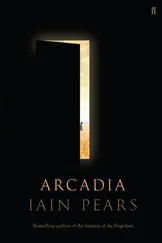
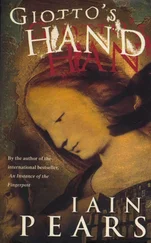
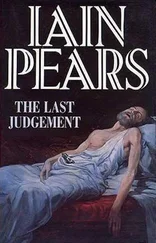
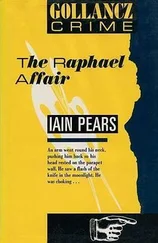


Обсуждение, отзывы о книге «The Portrait» и просто собственные мнения читателей. Оставьте ваши комментарии, напишите, что Вы думаете о произведении, его смысле или главных героях. Укажите что конкретно понравилось, а что нет, и почему Вы так считаете.