D. Wilson - The First Horseman
Здесь есть возможность читать онлайн «D. Wilson - The First Horseman» весь текст электронной книги совершенно бесплатно (целиком полную версию без сокращений). В некоторых случаях можно слушать аудио, скачать через торрент в формате fb2 и присутствует краткое содержание. Год выпуска: 2013, ISBN: 2013, Издательство: Little, Brown Book Group, Жанр: Исторический детектив, на английском языке. Описание произведения, (предисловие) а так же отзывы посетителей доступны на портале библиотеки ЛибКат.
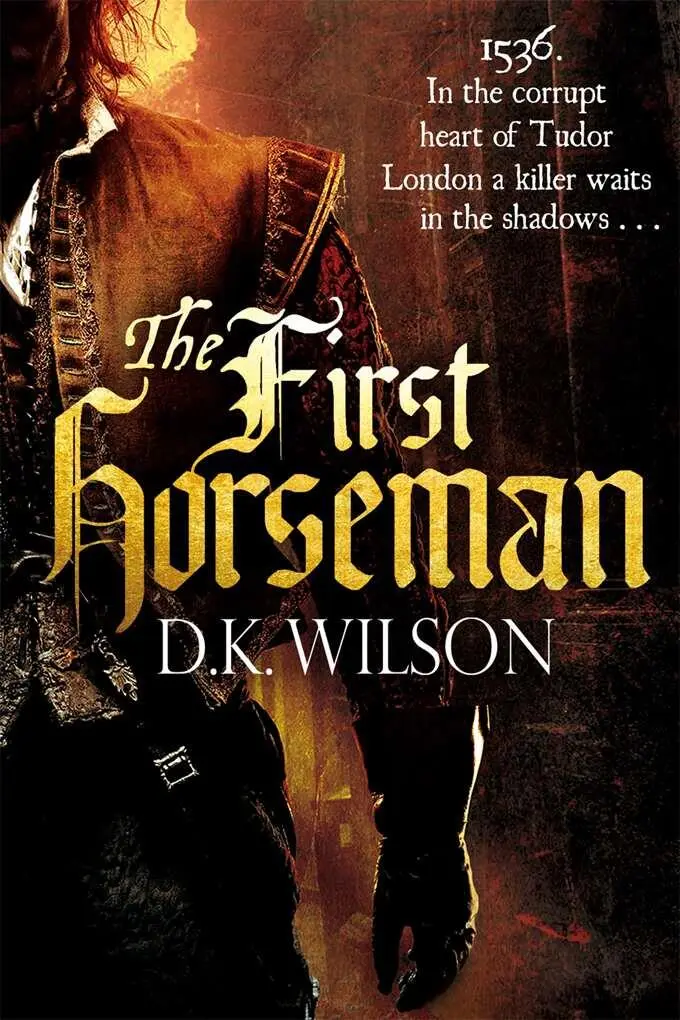
- Название:The First Horseman
- Автор:
- Издательство:Little, Brown Book Group
- Жанр:
- Год:2013
- ISBN:9781405518871
- Рейтинг книги:5 / 5. Голосов: 1
-
Избранное:Добавить в избранное
- Отзывы:
-
Ваша оценка:
The First Horseman: краткое содержание, описание и аннотация
Предлагаем к чтению аннотацию, описание, краткое содержание или предисловие (зависит от того, что написал сам автор книги «The First Horseman»). Если вы не нашли необходимую информацию о книге — напишите в комментариях, мы постараемся отыскать её.
The First Horseman — читать онлайн бесплатно полную книгу (весь текст) целиком
Ниже представлен текст книги, разбитый по страницам. Система сохранения места последней прочитанной страницы, позволяет с удобством читать онлайн бесплатно книгу «The First Horseman», без необходимости каждый раз заново искать на чём Вы остановились. Поставьте закладку, и сможете в любой момент перейти на страницу, на которой закончили чтение.
Интервал:
Закладка:
I was struggling to find words to explain, as gently as possible, that this was not going to happen, when the arrival of a new guest was announced. Moments later William Locke bustled into the room. He and Margaret greeted each other warmly and for several minutes we exchanged small talk. Locke had laid aside his cloak, revealing an exquisite doublet of dove grey, embroidered with black and silver thread. Now he unfastened the large purse attached to his belt and drew out a thick pamphlet whose pages were crisp and uncurled. ‘I am delighted to find you here, Master Treviot. I brought this along to show Mistress Packington but it will interest you, too.’
He laid the document on the table and pulled up a chair. I stared down at the blank cover. No title. No author’s name.
‘Printed in Antwerp,’ Locke explained, ‘and arrived in London two days since. I bought it from a bookstand in Paul’s Yard and straightway read it, cover to cover. When I went back this morning the stallholder told me his stock was all gone and he’d sent for more. “’Tis the talk of the City,” he said, and I well believe it.’
‘So, what is it?’ I asked.
‘’Tis about the Hunne case,’ Locke replied. ‘You were a child when it occurred and may not have heard of it, but it caused much commotion at the time.’
‘Indeed, I do know of it,’ I said. ‘In fact, I had the privilege of experiencing Master Hunne’s accommodation in the Lollards’ Tower. But this is an old story. Why should people be interested in it now?’
Locke smiled knowingly, excitement showing on his usually grave face. ‘Now is precisely the time to publish a full account of that appalling affair. All London is talking about poor Robert’s death — and we all know who encompassed that. Then there is the burning of Master Tyndale. People are still outraged about the sordid doing to death of a fine English scholar. Now, with the collapse of the papist rebellion in the North, the truth can finally come to light on all these things. Also, good news comes from the court — ’
‘Then the pilgrimage is definitely over?’ Margaret interrupted.
‘As good as,’ Locke replied. ‘When the king had the arch-traitor Aske to court and made much of him, the other leaders in the North felt themselves betrayed. The latest information is that the one-eyed lawyer has been shunned by former supporters and that his movement is falling apart in mutual recriminations. But, as I was saying,’ he hurried on, ‘good news comes from court. Cromwell, at the king’s command, is to preside over a grand council or synod of clergy and laymen to debate the great doctrines of our faith. The bishops will be called to justify all their traditions from Holy Scripture.’
‘All this is interesting,’ I said, ‘but how does it help us?’
‘Don’t you see?’ Locke looked at me impatiently. ‘It all affects the mood of the City. Now, though he might wish it otherwise, the king cannot afford to ignore London. He can threaten and dissimulate with the barbarous northern rabble but he dare not antagonise his capital. This’ — Locke prodded the pamphlet — ‘will inflame the populace and force His Majesty to expose the plot against Robert. Twenty-two years ago, a leading London merchant was brutally murdered in the Lollards’ Tower. Why? Because he challenged the power of the clergy and because he put his trust in English translations of the Bible. Today we have another leading member of our mercantile community assassinated for the very same reasons . Anyone would have to be totally beside his wits not to make the connection. After the Hunne case the complicity of the Bishop of London and his cohorts was hushed up, largely because the king did not want to antagonise the clergy. This pamphlet explains how the truth was suppressed and prints documents of the time that were concealed. It will infuriate people. The clergy will not find the king so compliant now, especially after the support some of them have expressed for the rebels.’
‘What exactly did happen to Master Hunne?’ Margaret asked. ‘I’ve often wondered.’
Locke picked up the pamphlet. ‘’Tis all here, in great detail — an appalling indictment of the lengths churchmen will go to to protect their own kind. It shows exactly how the bishop’s chancellor, William Horsey, plotted brutal murder. Thomas, this will help you to expose the truth about Robert’s death.’
Margaret shared his enthusiasm. ‘Perhaps the tide is really turning at last, William. Thomas here has worked so hard in our cause and, as a result, the villain who shot Robert has paid for it with his life. I ought to say, “God rest his soul” but, in truth, I cannot. Now, it only remains to expose the ones who lay behind this crime and, as you say, the papists will not escape punishment this time.’
After that, how could I tell Margaret that my interest in her husband’s death was at an end? For Locke’s benefit I went over again my censored account of events at Greenwich. The three of us talked until the great clock of St Paul’s struck eleven and the mercer scurried away to a business appointment. Before he said his goodbyes, he urged me to borrow the pamphlet. ‘It will give you a better idea of what these papist fanatics are capable of,’ he said.
That night I retired to my chamber to read the lamentable account of Richard Hunne’s last days. Whoever had compiled this record had had access to official documents, hitherto ‘lost’ or suppressed, and had set them out clearly with a commentary that revealed the full details of his conflict with church authorities and the horror of the revenge taken by those authorities. As I read, my thoughts went back to that small, bleak oppressive chamber in the Lollards’ Tower where I had spent dismal hours looking up at the hook from which that earlier occupant had been suspended. I identified with the poor man’s fate. It both repelled and fascinated me.
Hunne’s difficulties had begun in 1511 in a disagreement with his parish priest over a payment for professional services. The vicar took his stand on ecclesiastical law and Hunne countered with an appeal to civil law. Neither side would give way and the priest took the case to higher authority. The clergy closed ranks in support of their colleague and Hunne found himself facing a charge of heresy. He responded by bringing a civil case for slander against his accusers. It was to pre-empt this action that the bishop’s officers struck first and had Hunne thrown into the Lollards’ Tower, in October 1514. The whole City was now up in arms and waiting for Hunne’s civil action to come to court. There was only one escape route for his enemies — the ‘heretic’ must die. They concocted a plot and carried it out one night in December 1514. The coroner’s report set out all the vile details: the original plan was to make it appear that the prisoner had died from natural causes. They locked Hunne in the stocks in his cell while they made a last-minute attempt to persuade him to drop the charges. When this failed they dumped him on his bed with his arms bound behind him. There he stayed till past midnight, when William Horsey entered the cell, accompanied by John Spalding, a jailer, and Charles Joseph, a member of the bishop’s staff. They lost no time in setting about their grizzly task.
Joseph heated a long needle in a candle flame. While the others held their victim down, he thrust this up Hunne’s nose, aiming to pierce the brain and, thus, cause death without leaving any marks on the body. All this achieved was a massive effusion of blood, which stained Hunne’s shirt and Horsey’s jerkin. The prisoner was now screaming and writhing in agony, half on and half off the bed. The murderers panicked. They grabbed Hunne in an effort to silence him. They silenced him well enough: in the fracas they broke his neck.
Читать дальшеИнтервал:
Закладка:
Похожие книги на «The First Horseman»
Представляем Вашему вниманию похожие книги на «The First Horseman» списком для выбора. Мы отобрали схожую по названию и смыслу литературу в надежде предоставить читателям больше вариантов отыскать новые, интересные, ещё непрочитанные произведения.








Обсуждение, отзывы о книге «The First Horseman» и просто собственные мнения читателей. Оставьте ваши комментарии, напишите, что Вы думаете о произведении, его смысле или главных героях. Укажите что конкретно понравилось, а что нет, и почему Вы так считаете.