Peter May - Entry Island
Здесь есть возможность читать онлайн «Peter May - Entry Island» весь текст электронной книги совершенно бесплатно (целиком полную версию без сокращений). В некоторых случаях можно слушать аудио, скачать через торрент в формате fb2 и присутствует краткое содержание. Город: London, Год выпуска: 2013, ISBN: 2013, Издательство: Quercus Publishing, Жанр: Детектив, на английском языке. Описание произведения, (предисловие) а так же отзывы посетителей доступны на портале библиотеки ЛибКат.
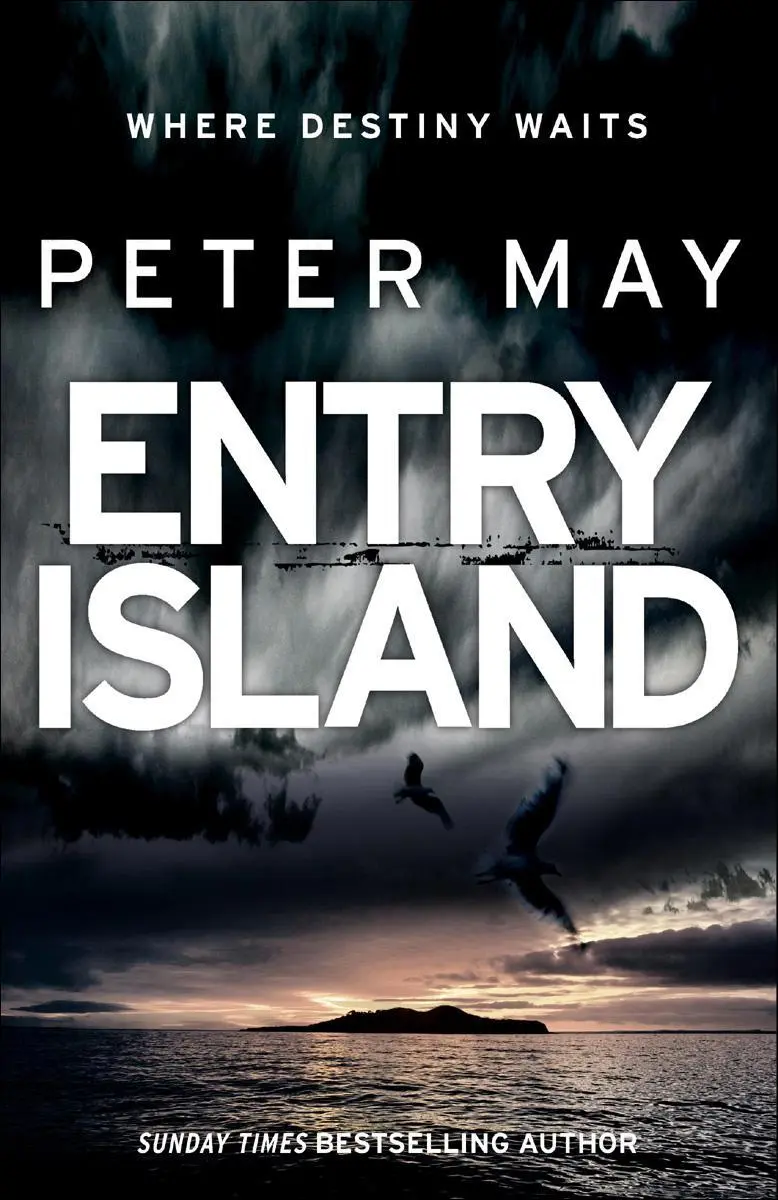
- Название:Entry Island
- Автор:
- Издательство:Quercus Publishing
- Жанр:
- Год:2013
- Город:London
- ISBN:978-1-78206-221-9
- Рейтинг книги:5 / 5. Голосов: 1
-
Избранное:Добавить в избранное
- Отзывы:
-
Ваша оценка:
Entry Island: краткое содержание, описание и аннотация
Предлагаем к чтению аннотацию, описание, краткое содержание или предисловие (зависит от того, что написал сам автор книги «Entry Island»). Если вы не нашли необходимую информацию о книге — напишите в комментариях, мы постараемся отыскать её.
When Detective Sime Mackenzie is sent from Montreal to investigate a murder on the remote Entry Island, 850 miles from the Canadian mainland, he leaves behind him a life of sleeplessness and regret.
FATE WILL FIND YOU...
But what had initially seemed an open-and-shut case takes on a disturbing dimension when he meets the prime suspect, the victim’s wife, and is convinced that he knows her — even though they have never met.
And when his insomnia becomes punctuated by dreams of a distant Scottish past in another century, this murder in the Gulf of St. Lawrence leads him down a path he could never have foreseen, forcing him to face a conflict between his professional duty and his personal destiny.
Entry Island — читать онлайн бесплатно полную книгу (весь текст) целиком
Ниже представлен текст книги, разбитый по страницам. Система сохранения места последней прочитанной страницы, позволяет с удобством читать онлайн бесплатно книгу «Entry Island», без необходимости каждый раз заново искать на чём Вы остановились. Поставьте закладку, и сможете в любой момент перейти на страницу, на которой закончили чтение.
Интервал:
Закладка:
But somehow it wasn’t his grandmother’s voice that he had heard. Not after being drawn into the story. It was as if his ancestor himself had read it out loud, as though he had been speaking directly to Sime and his sister.
Chapter eleven
When I was very young, it seemed I knew lots of things without ever really remembering how or where I learned them. I knew that my village was a collection of houses in the township they called Baile Mhanais. And if I were to try to spell it in English now it would look something like Bally Vanish. I knew that our village stood on the west coast of the Isle of Lewis and Harris in the Outer Hebrides, and I remember it was at school that I learned that the Hebrides were a part of Scotland.
The teacher was sent by the Church, which seemed to think that it was important for us to learn reading and writing — if only so we could read the Bible. I used to sit and listen to that teacher, overwhelmed by everything I didn’t know. At eight years old, my world seemed such a tiny place in the greater world beyond, and yet it filled my life. It was everything I knew.
I knew, for example, that there were nearly sixty people living in my village, and almost double that if you took account of the crofts that extended north and south along the shore on either side. I knew that it was the Atlantic Ocean that beat its relentless tattoo on the shingle shore below the village, and I knew that somewhere far away on the other side of it was a place they called America.
On the other side of the bay, fishermen from Stornoway sometimes laid out their catch of whitefish on the rocks to dry in the sun. They paid the children of the village a penny each to spend the day there and scare away the birds.
There was a jetty, too, built by the estate before Langadail was bought by its new owner. My father used to swear that the new laird spent nothing on improvements and that the place would go to rack and ruin.
There were a dozen blackhouses in our village. They sat at angles to each other on the slope, and my sister and I often played hide and seek among the dark alleys between them. Each house was built with the byre at the bottom end to let the animal waste drain out. At the end of each winter I would help my father break down the gable at the end of our house to shovel the cow shit on to a cart and haul it to our wee strip of land to use as fertiliser. It was always shit and seaweed we used to grow barley. And the thatch from the roof, blackened and thick with the sticky residue of peat soot, that we laid on the lazy beds with kelp to feed the potatoes. The oats seemed to grow fine without any encouragement. We reroofed each spring with fresh sheaves of barley stalks, then covered the thatch with fishermen’s netting and weighted it down with hanging stones. The smoke from the peat fire somehow managed to make its way through the roof eventually, and the few hens we owned found warmth and comfort in winter by roosting in it.
The walls of our blackhouse were thick. Two walls really, drystone-built, with earth and rubble in between, and turf on top to soak up the water that ran off the roof. I suppose that to someone who wasn’t accustomed to it, the sight of sheep grazing along the top of the walls might have seemed a bit odd. But I was used to seeing them up there.
All these things I knew because they were a part of me, as I was a part of the community of Baile Mhanais.
I remember the day that Murdag was born. I’d been sitting that morning with old blind Calum outside the door of his house near the foot of the village. Protective hills rose up to the north and east, though we were exposed to the weather from the west. The ridge beyond the bay provided a little shelter from the south-westerlies, and I suppose that my ancestors must have thought it as good a spot as any for the settling of their village.
As always, Calum wore his blue coat with its yellow buttons, and a time-worn Glengarry on his head. He said he could see shapes in the daylight, but not a thing in the darkness of his blackhouse. So he preferred to sit outside in the cold and see something, rather than be warm inside and see nothing.
I sat often with old Calum and listened to his stories. It seemed there was very little he didn’t know about the people there, and the history of Baile Mhanais. When he first told me that he was a veteran of Waterloo, I didn’t like to say that I had no idea what a veteran was, or what Waterloo might be. It was my teacher who told me that a veteran was an old soldier, and that Waterloo was a famous battle fought a thousand miles away on the Continent of Europe to defeat the French dictator, Napoleon Bonaparte.
It made me view old Calum in a different light. With something like awe. Here was a warrior who had defeated a dictator and he lived in my village. He said he had fought nine battles on the Continent, and was blinded in the last by his own misfiring flintlock.
It was cold that morning, with the wind blowing down from the north, and there were spits of rain in it with a hint of sleet. The winter could be wicked sometimes, and mild at others. My teacher said it was the Gulf Stream that stopped us from being under permanent frost, and I had a picture in my mind of a hot stream bubbling through the sea to melt the ice of the northern oceans.
I heard a voice carried on the wind. It was my sister, Annag. She was just over a year younger than me, and I turned to see her running down between the blackhouses. She wore a pale-blue cotton skirt beneath a woollen jumper that my mother had knitted. Her legs and feet were bare like mine. Shoes were for Sundays. And our feet were like leather on the soles.
‘Sime! Sime!’ Her little face was pink with exertion, her eyes wide with alarm. ‘It’s happening. It’s happening now!’
Old Calum found my wrist and held it firm as I stood up. ‘I’ll say a prayer for her, boy,’ he said.
Annag grabbed my hand. ‘Come on, come on!’
And we ran together, hand in hand, up between the black-houses, past our stack yard and into the barn at the back. We were both still wee and didn’t have to stoop to enter the house, unlike my father, who had to duck every time or crack his head on the lintel.
It was dark in here, and it took a moment for our eyes to grow accustomed to the light. The floor was rough-cobbled with big stones, hay stacked high at one end, and the potato store boxed off in almost total darkness at the other. We ran through into the tiny space between the fire room and the byre, startling the hens. There were two cows in the byre at that time, and one of them turned to low mournfully in our direction.
We crouched down behind the chicken wire at the door and peered into the fire room. The iron lamps that hung from the rafters gave off the stink of fish liver oil, cutting through the acrid peat smoke that rose from the fire in the centre of the room.
It was full of people. All women, except for my father. Annag clutched my arm, tiny fingers bruising my flesh. ‘The midwife came ten minutes ago,’ she whispered, and paused. Then, ‘What’s a midwife?’
There had been enough births in my short life that I knew the midwife was the woman who came to help with the delivery. But, actually, she was just one of our neighbours.
‘She’s come to take the baby from mamaidh ’s belly,’ I told her. And I saw her bent over the prone figure of my mother in the box bed at the far side of the room.
I am not quite sure now how I could tell, because there was no outward sign of it, but there was panic in the fire room. Silent panic that you could feel, even if you couldn’t hear or see it. Water was boiling in a pot hung from the chain above the burning peats. The other women were busy washing bloody rags and my father stood looking on helplessly. I had never seen him so powerless. He had a word for every occasion, my father. But right then he had nothing to say.
Читать дальшеИнтервал:
Закладка:
Похожие книги на «Entry Island»
Представляем Вашему вниманию похожие книги на «Entry Island» списком для выбора. Мы отобрали схожую по названию и смыслу литературу в надежде предоставить читателям больше вариантов отыскать новые, интересные, ещё непрочитанные произведения.




Обсуждение, отзывы о книге «Entry Island» и просто собственные мнения читателей. Оставьте ваши комментарии, напишите, что Вы думаете о произведении, его смысле или главных героях. Укажите что конкретно понравилось, а что нет, и почему Вы так считаете.